Book writing software for writing a novel in English
Fifteen book faces cut for long-form reading, British or American house style applied across the whole book, hyphenation for both, and a print-ready PDF and EPUB at the end. English is the language every writing tool claims. This page is about what a book tool has to get right after the typing stops.
Write a novel in English
Galley is where you write the novel and where you make the book. You write on a true book page from the first sentence: your trim size, your margins, the typeface the finished book is set in.
British or American style, applied to the whole book at once. Fifteen book faces, all licensed so you can sell what you print.
What comes out is a print-ready PDF and a valid EPUB, with the font embedded. The book prints the way you saw it on screen.
Why Galley is the right book writing software for a novel in English
English is the language every writing tool already claims, so the question is not whether a tool can take your typing. It is where the tool stops.
Most of them stop at the manuscript. You get a good editor, folders, notes, a word count, and then a file that somebody else has to turn into a book. The last mile is the expensive one: a designer, or a template you fight, or an afternoon in a page-layout program learning what a gutter is. That gap is where a finished draft sits for six months.
Galley has no such step. You write on a true book page from the first sentence: your trim size, your margins, your typeface, your chapter openings. What you see while you write is the page, so nothing moves at the end. The print-ready PDF and the EPUB are the same book you have been looking at.
The other reasons an English novelist ends up here are the refusals. There is no AI anywhere near the prose, no autocomplete and no rewriting, and your manuscript is not training data. There is no subscription, because a book takes years and rent on your own manuscript is the wrong shape for that. And there are no sprints, no story-structure templates and no productivity scoring, and that is deliberate. The philosophy page is the long version.
How English gets typeset
The page is real from the start. Six trim sizes, from mass market at 4.25×6.87 inches to Royal at 6.14×9.21, with mirrored margins and a gutter that accounts for the binding. Change the trim and the book reflows into it.
Chapter openings are a convention, not a style. Five of them, from a bare title to full dress with a drop cap and a folio suppressed on the opening page. Scene breaks typeset themselves: type three hyphens and you get the ornament, correctly spaced, and it never lands orphaned at the foot of a page.
Running heads do what books do, with your name on one side and the title on the other, suppressed where a book suppresses them.
Italics are italics. English is one of four scripts on the shelf with a real italic tradition, and every one of the fifteen English faces ships a drawn italic. Nothing is sloped mechanically.
Hyphenation and justification are separate decisions. Justification is off by default because ragged right is a legitimate choice and a lot of trade fiction sets that way. Turn it on and the print PDF hyphenates by British or American patterns, following your house style.
The typefaces you get for English
Fifteen faces, every one cut for long-form reading on paper, and every one under the SIL Open Font License. That licence is not a stylistic preference. Galley embeds the font inside your PDF and your EPUB, which is redistribution, and most of the type the trade actually sets books in is licensed per title or per print run.
Five are marked Recommended. They are the safe choices for a novel and you will not go wrong with any of them.
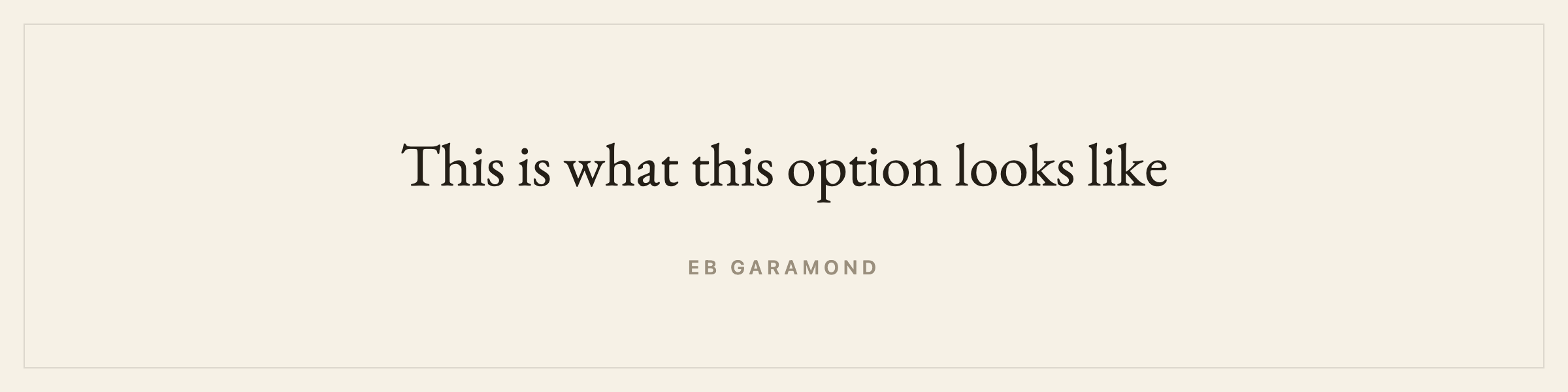
EB Garamond is Claude Garamond by way of the Egenolff-Berner specimen, and Garamond is the most-set face in English trade fiction.
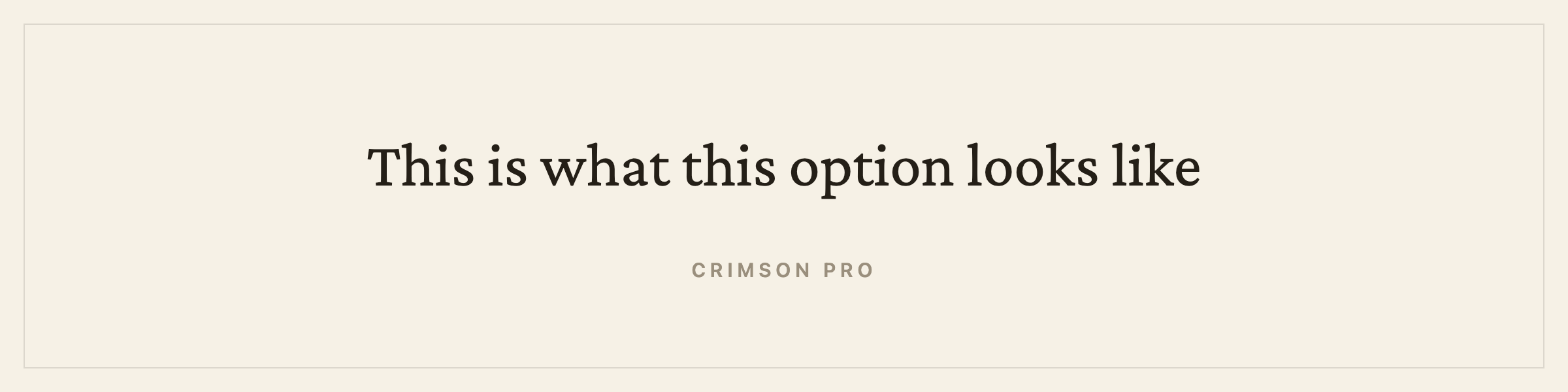
Crimson Pro sits in the same oldstyle tradition as Minion.
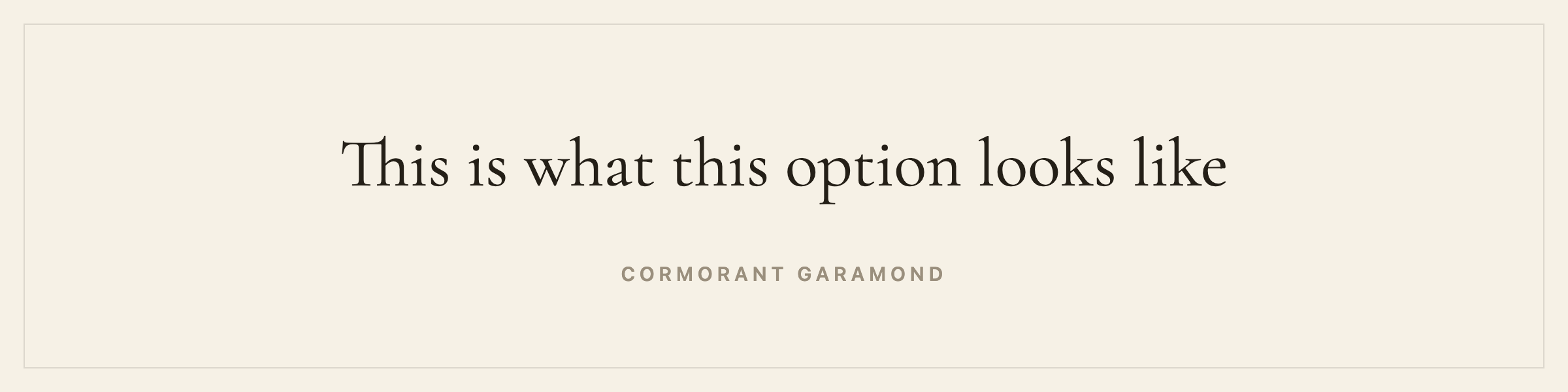
Cormorant is the display-weight Garamond, high contrast and finely cut.
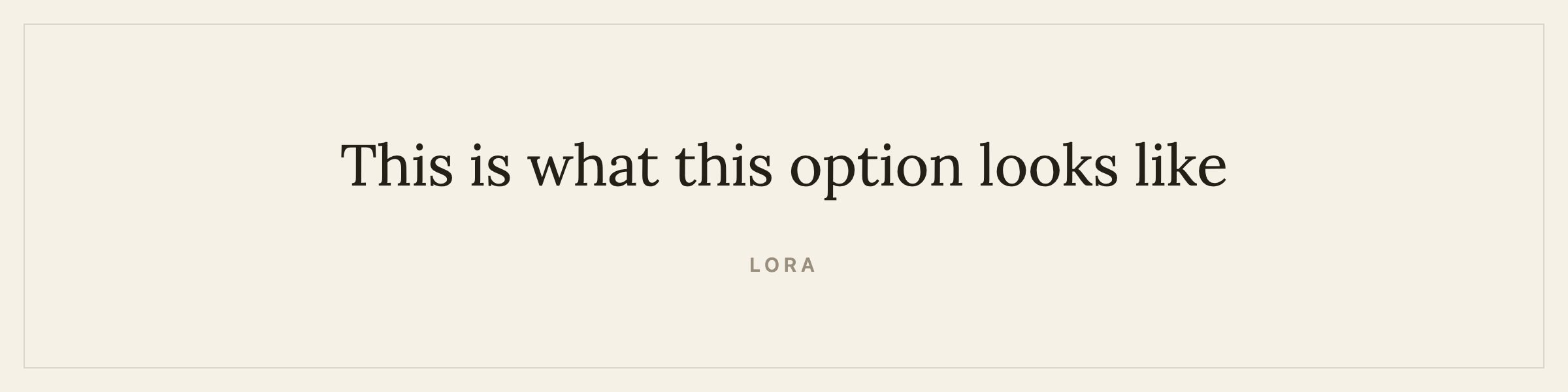
Lora is contemporary, with brushed serifs that hold up at small sizes.
Libre Baskerville is Baskerville, set a little wider for reading.
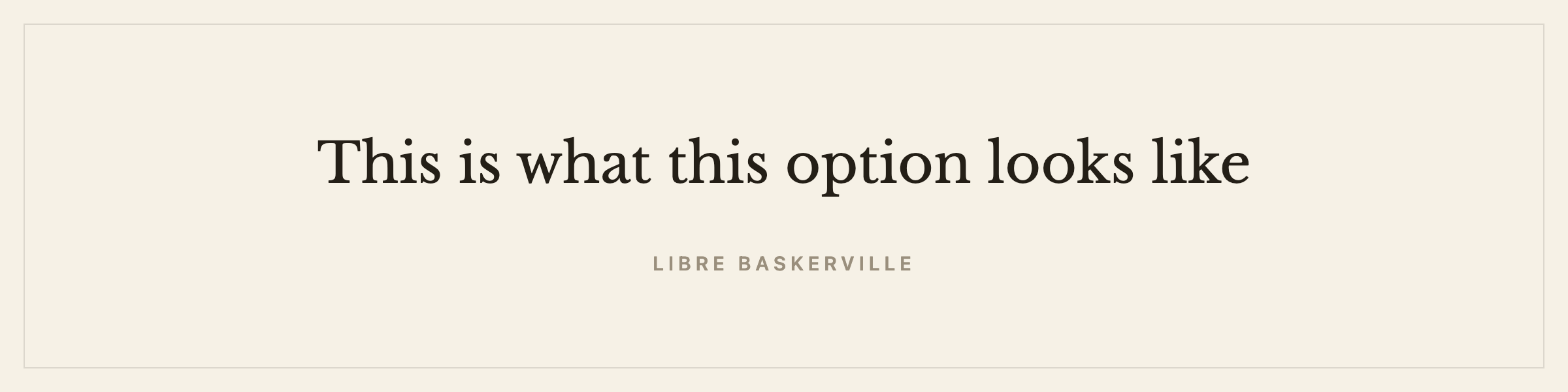
The rest of the shelf is Literata, Source Serif 4, Spectral, Alegreya, Vollkorn, Cardo, Gentium Book Plus, Newsreader, Libre Caslon Text and Charis SIL. Most are revivals of the faces English novels have been set in for centuries. Libre Caslon Text is Caslon, Cardo follows Bembo, Source Serif 4 comes out of Fournier, Charis SIL descends from Bitstream Charter, and Alegreya was drawn specifically for literature.
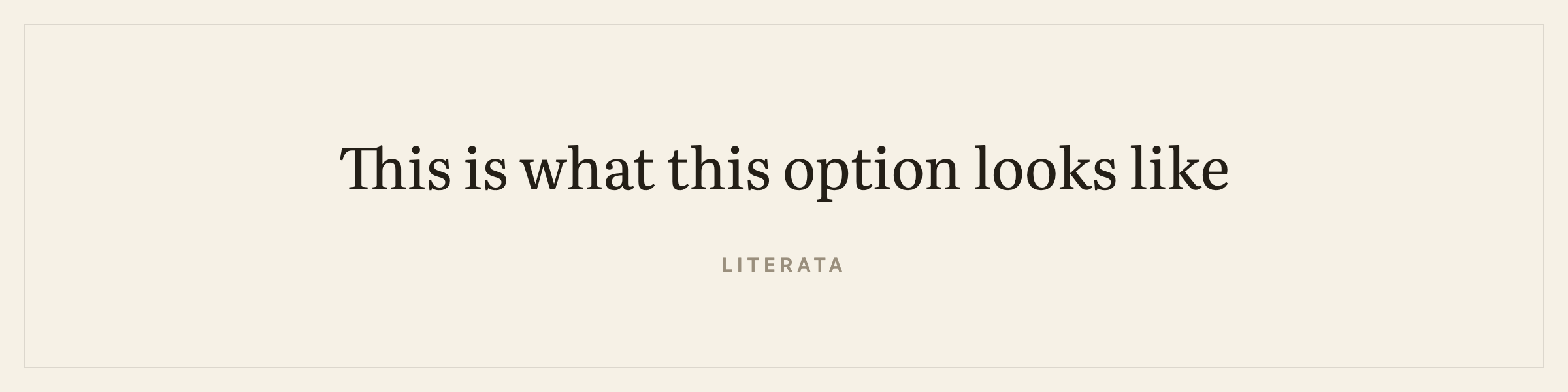
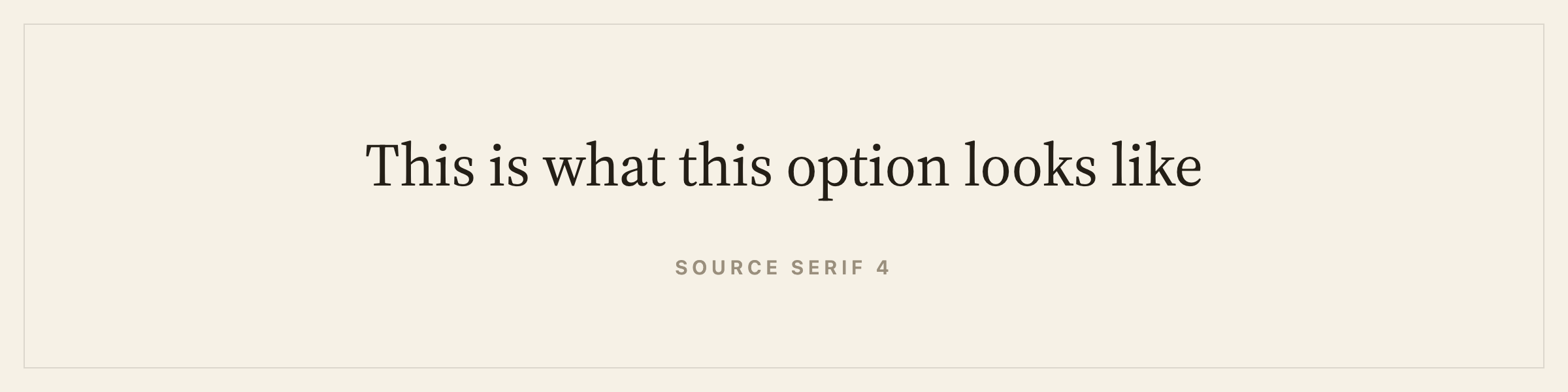
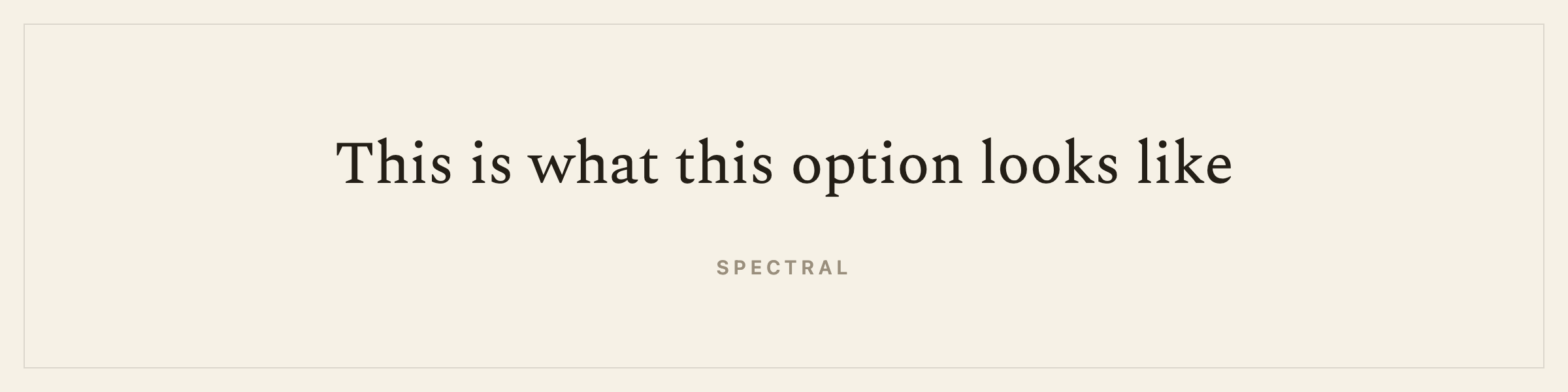
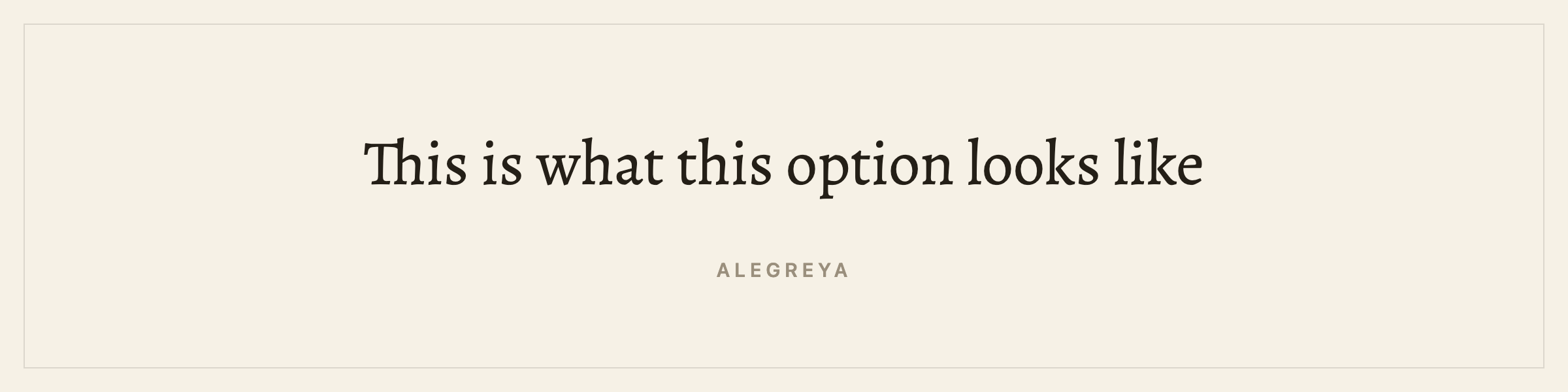
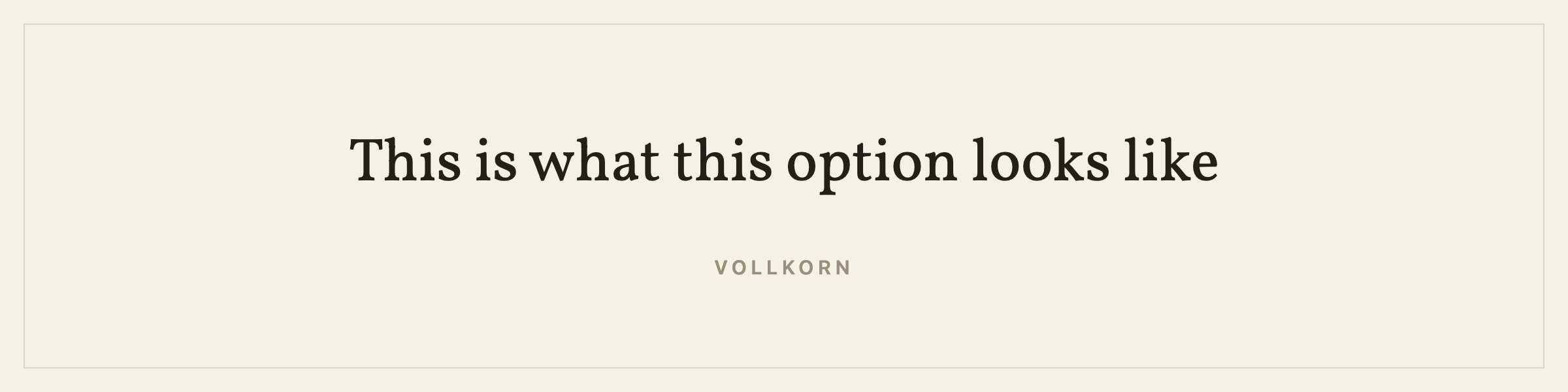
What you will not find here: Sabon, Bembo, Minion, Adobe Garamond, Dante. Those are the faces the industry uses and every one of them would put a licensing bill between you and your own book. The typeface documentation lists every face on the shelf with the reasoning behind it.
Exports for an English novel
Every export is built from the same book, so a change to the design shows up in all of them.
- Print-ready PDF. Your trim, mirrored margins, a real gutter, the font embedded. This is the file KDP, IngramSpark or a local printer takes.
- EPUB 3, with your cover, valid, tagged
en. - Store-ready EPUBs tuned per shop for Kindle, Kobo and Apple Books.
- Word and Markdown, for an editor who tracks changes, or for an archive.
- Standard manuscript format, double-spaced, the way an agent asks for it.
- A proofreading PDF two pages to a sheet for a red pen, and a large print PDF of the same book.
- A watermarked copy per beta reader, as a file or a link with their name on it.
Before you upload, the KDP preflight checks trim, margins, page count and metadata against Amazon’s rules, and the delivery readiness check asks whether the book is actually finished or only feels finished.
British and American style
House style in Galley is a book-level setting. You choose once and it applies to the whole book. It covers spelling, quotation marks and hyphenation together, because those three drift as a set. American style takes double quotes and puts commas inside them, British style commonly takes single quotes and puts them outside, and a manuscript written across three years usually contains both.
The consistency sweep is the tool for the drift: British against American spelling, hyphenation, curly quotes and dashes, across the whole book at once instead of a chapter at a time.
For the rules themselves, three of the reference sheets cover the cases that come up most: UK vs US style, dialogue punctuation, and dashes, hyphens and ellipses.
How long an English novel is
Adult literary and commercial fiction generally lands between 80,000 and 100,000 words. Thrillers and crime run shorter, epic fantasy runs much longer, and young adult sits around 60,000 to 80,000. Debut submissions are judged more tightly than second books.
Galley counts live, per chapter and per book, and shows the whole shape of the book in one chart. For the nuances that go into this there is novel word counts by genre, the word count to page count converter, and a reading time calculator. The long version is in how long should a novel be.
Trim sizes for an English book
Six standards. Mass market at 4.25×6.87 inches, small trade at 5×8, B-format at 5.06×7.81, digest at 5.5×8.5, US trade at 6×9, and Royal at 6.14×9.21. B-format is the classic UK and European paperback novel. US trade is the self-publishing default and the one most print-on-demand advice assumes.
Trim decides your page count, page count decides your spine and your printing cost, so it is worth choosing early. The trim size comparison puts them beside each other, the spine width calculator helps here, and choosing a trim size is the longer argument.
Metadata and front matter
The copyright page writes itself from the metadata you already filled in: your name, the year, the ISBN, the edition, the disclaimer. Front and back matter follow the conventional order, and the table of contents builds itself from the book.
An ISBN comes from the agency for your country of publication. You do not always need one, and whether you need an ISBN covers when you do. The front and back matter checklist and the order of front matter cover what goes where.
Translating out of English
A translation in Galley is its own book: its own language, its own typeface shelf, its own ISBN, its own cover, its own blurb, still linked to the original so the dashboard does not fill with near-copies. Open a chapter and the editor splits, original read-only on the left, your translation on the right.
Galley knows 54 languages, and the typeface shelf follows the language, so a Persian or a Japanese edition is set in faces drawn for that script instead of your English serif. There are pages on writing a novel in Persian, writing a novel in Russian and writing a novel in Irish that go through what each of those needs, and writing software for novelists who don’t write in English covers every script on the shelf.
No machine touches the prose, which includes not offering to translate it.
Self-publishing and traditional publishing in English
Self-publishing. Amazon lists English for Kindle ebooks, paperbacks and hardcovers, so every route is open. Galley’s preflight checks the file before you upload, and the same print PDF goes to IngramSpark, to Lulu, or to a printer who has never heard of Amazon. The EPUB is valid and store-agnostic. Nothing in the file needs Galley to open it later.
Traditional publishing. The submission package assembles the synopsis, the bio and the opening chapters, and the manuscript exports in standard manuscript format, double-spaced, in the shape agents actually ask for.
You do not have to decide at the start. The same book produces a query-ready manuscript and a print-ready interior, so trying one road and then the other costs you nothing but the query letters. The longer arguments are in Galley for self-publishing and Galley for traditional publishing.
Where to go next
- From manuscript to published book is the whole route, in order.
- Book typography basics is the set of rules that makes a page look professionally made.
- EPUB vs print PDF explains what each format can and cannot do.
- Is Galley for you says who it is for and who it is not for.
Questions people ask about writing a novel in English
What is the best book writing software for an English novel?
That depends on where you stop. Most tools take you to a finished manuscript and hand the typesetting to somebody else. Galley takes you to a print-ready PDF and a valid EPUB, because the book is set on a real page from the first sentence instead of reformatted at the end.
How many typefaces does Galley have for English?
Fifteen, every one cut for long-form reading on paper, and all licensed for commercial publishing. Five are marked Recommended: EB Garamond, Crimson Pro, Cormorant, Lora and Libre Baskerville.
Can Galley handle British and American style in the same tool?
Yes. House style is a book-level setting covering spelling, quotation marks and hyphenation, and the consistency sweep finds the places a book has drifted between the two.
Can I publish the file on Amazon KDP?
Yes. Amazon lists English for Kindle ebooks, paperbacks and hardcovers, and Galley's KDP preflight checks trim, margins, page count and metadata against Amazon's rules before you upload. The same PDF goes to IngramSpark or any other printer.
Does Galley use AI to write or edit my prose?
No. There is no AI anywhere near your writing, no autocomplete, no rewriting, no suggestions. Your manuscript is also not used to train anybody's model.
Is Galley a subscription?
No. It is one payment for the app, and the book you make with it stays yours in formats nothing needs Galley to open.
Other languages
- Book writing software for PersianWrite and typeset a Persian novel: right to left, set in Markazi Text or Amiri, with the half-space intact and a print-ready PDF at the end. What Persian asks of a book tool, and where most of them give up.
- Book writing software for RussianWrite and typeset a Russian novel: ten book faces with real Cyrillic italics, hyphenation by Russian rules, a print-ready PDF and an EPUB. Including the one thing Amazon will not do for you.