Book writing software for writing a novel in Russian
Ten of Galley's book faces carry a full Cyrillic alphabet with a properly drawn italic, the print PDF hyphenates by Russian rules, and the shelf hides the faces that cannot set a word of Russian. Amazon KDP does not publish in Russian at all, so the export matters more here than it does in English.
Как написать роман на русском
Galley — это программа для написания и вёрстки романа. Вы пишете сразу на настоящей книжной странице: тот же формат, те же поля, та же гарнитура, что и в готовой книге.
Кириллицу держат десять книжных гарнитур, курсив в них нарисован, а не наклонён программно, переносы расставляются по русским правилам.
На выходе — PDF, готовый для типографии, и EPUB с вшитым шрифтом. Книга печатается ровно так, как вы её видели на экране.
Интерфейс на английском. Книга — на русском.
Why Galley is the right book writing software for a novel in Russian
Nothing about Cyrillic is hard for a browser. The letters are separate, they run left to right, they need no shaping engine. So a Russian novelist gets a long way into a bad tool before anything goes wrong.
The fonts go wrong first. Most tools hand you a list and let you pick. Five of the fifteen Latin book faces in Galley cannot set a single word of Russian. Libre Baskerville is one, and it is a lovely face. Before the shelf was filtered by language you could pick it, write eighty thousand words, and meet the problem at export. Now the shelf is filtered. Set the book’s language to Russian and those five are not offered.
Then the italics. Cyrillic italic is a different set of letterforms. Italic т is drawn like a Latin m, italic д like a g. A font with no drawn Cyrillic italic gets faked by the renderer, which tilts the upright letters and produces something a Russian reader clocks straight away. All ten faces on the Russian shelf carry a real one.
Hyphenation only bites if you justify. Russian words are long, and Russian justified without hyphenation opens rivers of white space down the page. Galley hyphenates Russian by Russian patterns, in the print PDF, when justification is on.
The rest of the app is the same app: a true book page at your trim size, the story bible beside the manuscript, a print-ready PDF and a valid EPUB at the end.
How Russian gets typeset
Ten faces, one alphabet, real italics. The Cyrillic coverage in these faces is the full alphabet. Some Latin fonts carry a handful of Cyrillic letters because they double as mathematical symbols, which passes a lazy check and is nowhere near enough to set a book, so coverage here is tested against the whole alphabet.
Hyphenation is on the language, not on the app. 35 of the 54 languages Galley knows carry hyphenation patterns and Russian is one of them. It applies in the justified print PDF only.
Ё is your decision. Whether to print ё or let it collapse into е is a house style question that Russian publishers answer differently, and it is not one a tool should decide for you. The style sheet in the story bible is where you record the rule you are following, and book-wide find and replace is how you enforce it across every chapter at once.
Sorting follows the book’s alphabet. A cast list, a glossary or a set of references in a Russian book sorts in the Russian alphabet. Sorted by code point instead, a cast list comes out in an order no Russian reader would recognise.
The typefaces you get for Russian
Ten of the fifteen book faces carry a full Cyrillic alphabet: Alegreya, Charis SIL, Cormorant, EB Garamond, Gentium Book Plus, Literata, Lora, Source Serif 4, Spectral and Vollkorn. Every one is under the SIL Open Font License, which is the licence that lets Galley embed the font inside a PDF or EPUB you sell.
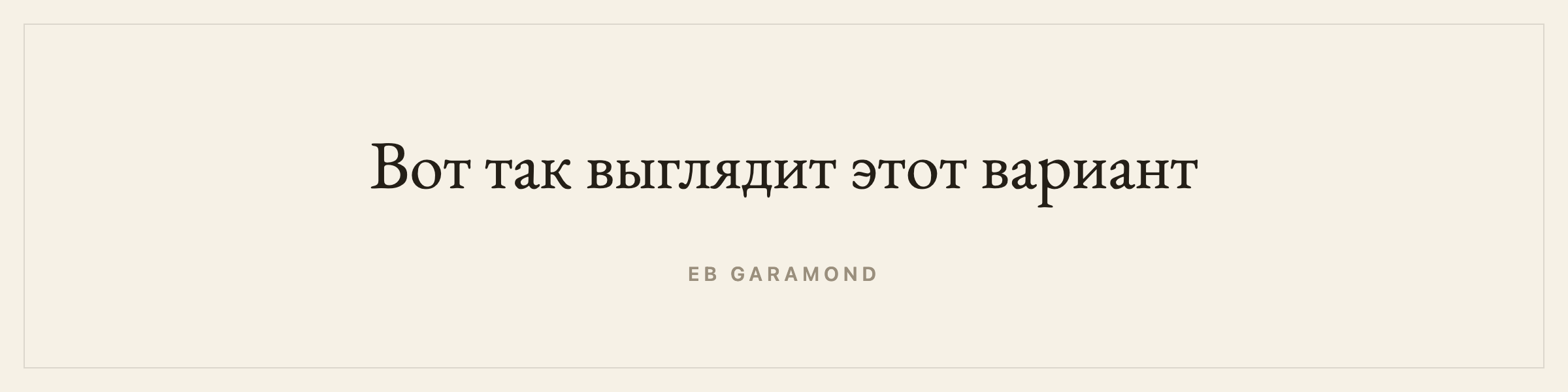
EB Garamond is Claude Garamond by way of the Egenolff-Berner specimen, and it is the safe first choice for a novel.
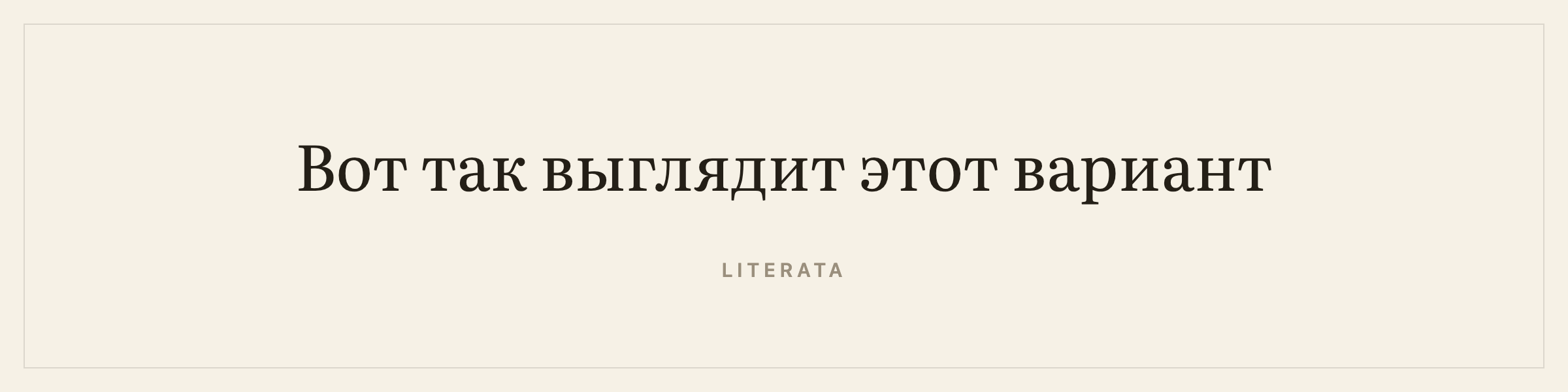
Literata was drawn for Google Play Books, for long-form reading on a screen and on paper.
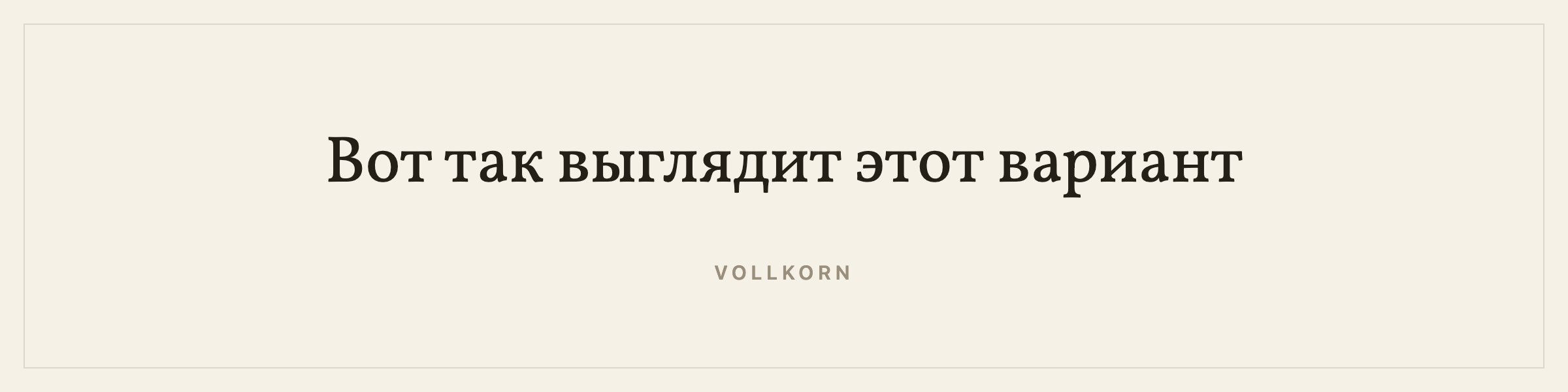
Vollkorn is warmer and a little heavier, and it holds up well at small sizes.
What you will not find here: Литературная and Академическая, the two faces Soviet and Russian book publishing was built on. Both are ParaType’s, and both would put a per-title licensing bill between you and your own book. The typeface documentation lists every face on the shelf, by language.
Exports for a Russian novel
Every export is built from the same book, so the language setting follows into all of them.
- Print-ready PDF. Your trim size, mirrored margins, a real gutter, the font embedded, hyphenated by Russian rules if you justify.
- EPUB 3, with your cover, tagged
ruso a reading device knows what it is holding. - Store-ready EPUBs tuned per shop for Kindle, Kobo and Apple Books.
- Word and Markdown, for an editor who wants to track changes, or an archive.
- Manuscript format, double-spaced, the way an editor asks for it.
- A proofreading PDF set two pages to a sheet for a red pen, and a large print PDF of the same book.
- A watermarked copy per beta reader, as a file or a link with their name on it.
The revision tools work in Russian because they were rewritten to stop assuming the Latin alphabet. Overused words, name consistency and the consistency sweep all tokenise on Unicode letter properties, so they find Russian words instead of silently finding nothing.
Russian punctuation
Russian dialogue is set with a dash at the head of the line. Quoted speech inside a paragraph takes «ёлочки», with „лапки“ for a quote inside a quote. Both are characters you type, and both survive into the print PDF and the EPUB unchanged.
Type a straight double quote in a Russian book and you get « and », because the quote marks follow the book’s language. That was broken until the day this page was written: the rule was keyed by script, and Cyrillic covers Russian and Ukrainian, which quote «», alongside Bulgarian and Serbian, which quote „“. All four had been getting English curly quotes. Writing the sentence for this page is how I noticed.
The non-breaking space is the other Russian typographic habit worth keeping: it holds a one-letter preposition to the word it governs so the line never breaks between them. The editor’s Invisibles toggle shows non-breaking spaces as distinct from ordinary ones, so you can see where they are.
The dialogue punctuation rules and the dashes, hyphens and ellipses sheets cover the cases that are not script-specific.
How long a Russian novel is
Russian publishing counts in авторские листы, and one авторский лист is 40,000 characters including spaces. Galley counts your book in words, live, per chapter and per book, so if you are working to a contract stated in listy you will be converting. The rough conversion most people use is about 6,000 to 6,500 Russian words per лист, which makes a 10 list novel somewhere around 60,000 to 65,000 words.
Check out the word count to page count converter that turns a manuscript length into a page count at your trim, and novel word counts by genre gives you the ranges publishers work to.
Trim sizes for a Russian book
Galley offers six standard trim sizes, from mass market at 4.25×6.87 inches to Royal at 6.14×9.21 inches. Russian trade paperbacks are commonly issued at around 130×200mm, which sits between the B-format at 5.06×7.81 inches and the Digest at 5.5×8.5. If you are printing with a Russian press instead of a print-on-demand service, ask them what they set and match it before you start, because trim decides your page count and your page count decides your spine.
The spine width calculator and the trim size comparison would be helpful here.
Metadata and the copyright page
Your title, your name and your dedication are ordinary text, and every field in the app detects its own direction and script, so a Cyrillic title in one field and a Latin ISBN in the next both come out right. Export filenames keep their Cyrillic too: a book called Тихие часы downloads under its own name instead of a row of underscores.
The copyright page builds itself from the metadata you already filled in. An ISBN comes from the agency for your country of publication. The language of the book has nothing to do with it. Some storefronts will also ask for a Latin transliteration of your name in their own metadata fields.
Typing Russian
Spellcheck runs against your own browser’s dictionary. Install the Russian dictionary on your machine and a Russian book spellchecks. Nothing is uploaded to make that happen, in Russian or in any other language, because the check happens in your browser and never leaves it.
Translating into or out of Russian
A translation in Galley is its own book: its own language, its own typeface shelf, its own ISBN, its own cover, its own blurb, still linked to the original. Open a chapter and the editor splits, with the original read-only on the left and your translation on the right.
The consequence is that a Russian edition of your English novel is not the
English book with different words in it. It gets a face that can set Cyrillic,
Russian hyphenation, and a ru tag in the EPUB. The same goes for
writing a novel in English and
writing a novel in Persian.
No machine touches the prose. Galley has no AI anywhere near your writing, which includes not offering to translate it for you.
Self-publishing and traditional publishing in Russian
Start with the fact that decides everything else: Amazon KDP does not publish in Russian. Not as a Kindle ebook, not as a paperback, not as a hardcover. Amazon’s own supported-language lists are three separate lists and Russian is on none of them. That is not a Galley limitation and no tool can route around it.
So the export is the product. Galley gives you a print-ready PDF that any printer can take and a valid EPUB that any store that sells Russian can take, and neither file is shaped for Amazon in particular. Everything Amazon-specific in the app, the preflight and the KDP metadata fields, switches itself off on a book in a language Amazon does not sell, and it says why instead of letting you find out at upload.
Traditional publishing. Russian trade publishing is concentrated in a few large houses and works on the авторский лист as its unit. What Galley gives you is a submission package with the synopsis, the bio and the opening chapters, and a manuscript in the double-spaced format an editor asks for.
Either way the decision is not one you make at the start. The same book exports a submission and a print-ready interior. The longer arguments are in Galley for self-publishing and Galley for traditional publishing.
Where to go next
- Writing software for novelists who don’t write in English covers every script Galley sets, and says what is unfinished.
- Book design and typefaces lists every face by language, with the reasoning behind each one.
- Series and translations covers the full language list and the side-by-side view.
- The typography rules that make a book look professionally made applies to a Russian book as much as an English one.
Questions people ask about writing a novel in Russian
Can I write a novel in Russian in Galley?
Yes. Set the book's language to Russian on its metadata page and the typeface shelf narrows to the ten faces that carry a full Cyrillic alphabet, the print PDF hyphenates by Russian rules, and the EPUB is tagged Russian.
Which fonts can set Russian?
Ten of the fifteen Latin book faces carry Cyrillic: Alegreya, Charis SIL, Cormorant, EB Garamond, Gentium Book Plus, Literata, Lora, Source Serif 4, Spectral and Vollkorn. The other five cannot render a word of Russian and are hidden on a Russian book.
Do the italics work in Cyrillic?
Yes. Cyrillic italic is a different set of letterforms, and all ten faces ship a drawn one. Emphasis behaves the way it does in English.
Does Galley hyphenate Russian?
Yes, using Russian hyphenation patterns, and only when you justify the print PDF. Justification is off by default, and ragged right never needs hyphenation.
Can I publish a Russian book on Amazon KDP?
No. Amazon does not list Russian in any format, for ebook, paperback or hardcover. Every Galley export still works, so the file goes to another store, another print-on-demand service, or a printer.
Is the Galley interface available in Russian?
No. The interface is English and stays English. One person builds Galley, and a half-translated interface is worse than an English one. Your book is fully Russian.
Other languages
- Book writing software for PersianWrite and typeset a Persian novel: right to left, set in Markazi Text or Amiri, with the half-space intact and a print-ready PDF at the end. What Persian asks of a book tool, and where most of them give up.
- Book writing software for EnglishWrite and typeset an English novel: fifteen book faces, British or American house style, a print-ready PDF for KDP or IngramSpark and a valid EPUB. One payment, no subscription, no AI in your prose.