Book writing software for writing a novel in Persian
Galley sets Persian the way a Persian book is set. Right to left, in faces cut for the script, with the نیمفاصله preserved, no fake italic, Persian digits in the print PDF, and an embedded font licensed for you to sell the book. The interface is English. The book is Persian.
نوشتن رمان به فارسی
گلی نرمافزاری برای نوشتن و صفحهآرایی رمان است. از همان جملهٔ اول روی صفحهٔ واقعی کتاب مینویسید: همان قطع، همان حاشیه و همان قلمی که در نسخهٔ چاپی خواهید دید.
متن از راست به چپ چیده میشود، نیمفاصله دستنخورده میماند، و قلمها همانهایی هستند که یک رمان فارسی با آنها حروفچینی میشود: مرکزی، امیری، نسخ نوتو و شهرزاد نو.
خروجی، یک PDF آمادهٔ چاپ و یک فایل EPUB است که قلم در آن جاسازی شده است. کتاب همانطور چاپ میشود که روی صفحه دیدید.
محیط برنامه انگلیسی است. کتاب شما فارسی است.
Why Galley is the right book writing software for a novel in Persian
Any browser renders Persian. Every text box on the internet does it, which is why a writing tool can look correct for months. The letters join, the text runs the right way, nothing complains. Then you export.
The typeface goes first. A book file embeds its font, and a tool built around one Latin serif embeds that serif, which has no Persian glyphs. You get empty boxes, or a silent substitution that sets your novel in whatever the PDF library had lying around.
Direction goes next. A print PDF is a fixed page. If the layout engine measures its lines left to right, no amount of correct CSS in the editor saves the file.
Then the licence. The faces the publishing trade actually sets books in are licensed per title or per print run, and embedding one in a file you sell is what the licence charges for. A tool that has not paid that bill cannot legally hand you the font your book needs.
Galley settles all three from the language on your book’s metadata page. Set it to Persian and the typeface shelf shows only faces that can set Persian, the page and the exports run right to left, and the embedded font is one you are allowed to sell the book with.
Everything else is the same app. You write on a true book page at your chosen trim size, keep the story bible beside the manuscript, and export a print-ready PDF and a valid EPUB. None of that changes because the book is in Persian.
How Persian gets typeset
Persian uses the Arabic script with four extra letters, پ چ ژ گ, and its own digit forms. It is cursive, so every letter takes a different shape depending on what sits beside it. Each of those facts has a consequence a Latin-first tool does not plan for.
Direction is a print decision. In a right-to-left book the leaves turn the other way, so the recto, the page a chapter opens on, is the left-hand page. The inside and outside margins swap with it, and the running heads and folios go with the gutter. The PDF declares right-to-left page progression so a viewer showing two-up spreads pairs the pages correctly, and the EPUB carries the same declaration on its spine. The file order never reverses: page ۱ is still the first page in the file.
Letters join, so headings must not letter-space. Latin headings are often tracked open a fraction of an em. Do that to Persian and you break the join. It reads as a fault. Chapter titles and scene headings on a Persian book carry no tracking at all.
There is no italic. Persian has no italic convention, so a slanted Naskh is not emphasis, it is a mistake. The italic button is hidden on a Persian book and its shortcut is unbound. Existing marks in imported text are never stripped, they just do not render as a slant.
Justification does not use kashida. Traditional Arabic-script justification elongates the connecting strokes instead of stretching the word spaces. Galley does not do that, so set a Persian book ragged right, which is what most contemporary publishers do anyway. Justification is off by default and Persian carries no hyphenation patterns.
The digits are Persian. ۰۱۲۳۴۵۶۷۸۹, not the Arabic-Indic forms and not the Western ones. Numbered lists count in them on screen and in the print PDF. The one place they fall back to Western digits is the Word export, because the Office file format has no Arabic-Indic numbering value to write. That is a Word limitation, and nobody prints a book from a DOCX anyway.
The half-space survives. نیمفاصله is a zero-width non-joiner, and a lot of software treats invisible characters as debris to be swept up on paste. In a Persian book it spells the word. It survives typing, pasting, autosave and both exports, and the editor’s Invisibles toggle shows it as a meaningful mark instead of flagging it as junk.
The typefaces you get for Persian
Four faces, all under the SIL Open Font License, which is the licence that lets the software embed the font in a file you sell.
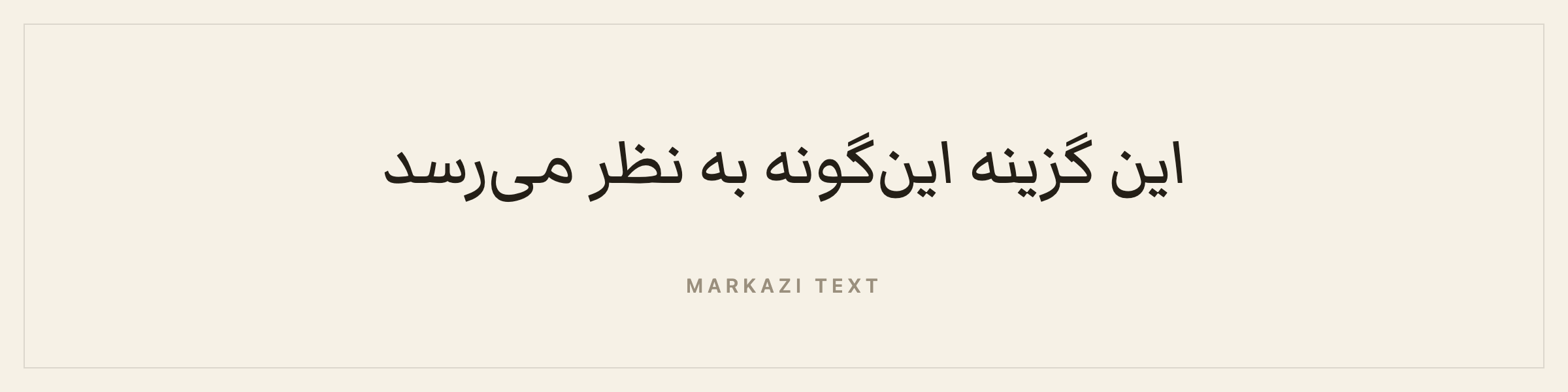
Markazi Text is the one to reach for first. It was drawn for Persian by a Persian type designer, where the other three are Arabic faces that cover Persian as well.
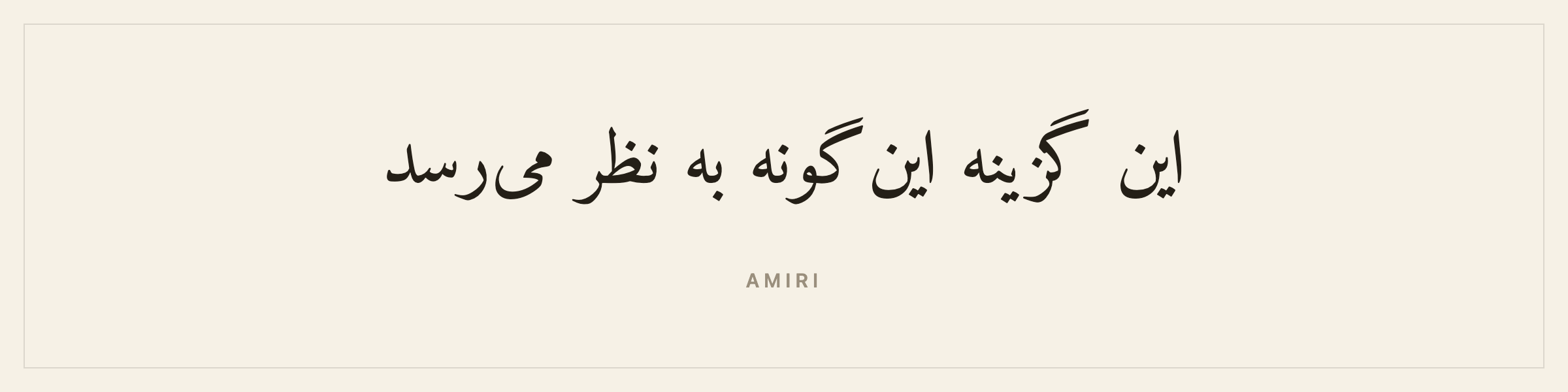
Amiri is the literary choice. It is modelled on the type cut for the Bulaq Press in nineteenth-century Cairo.
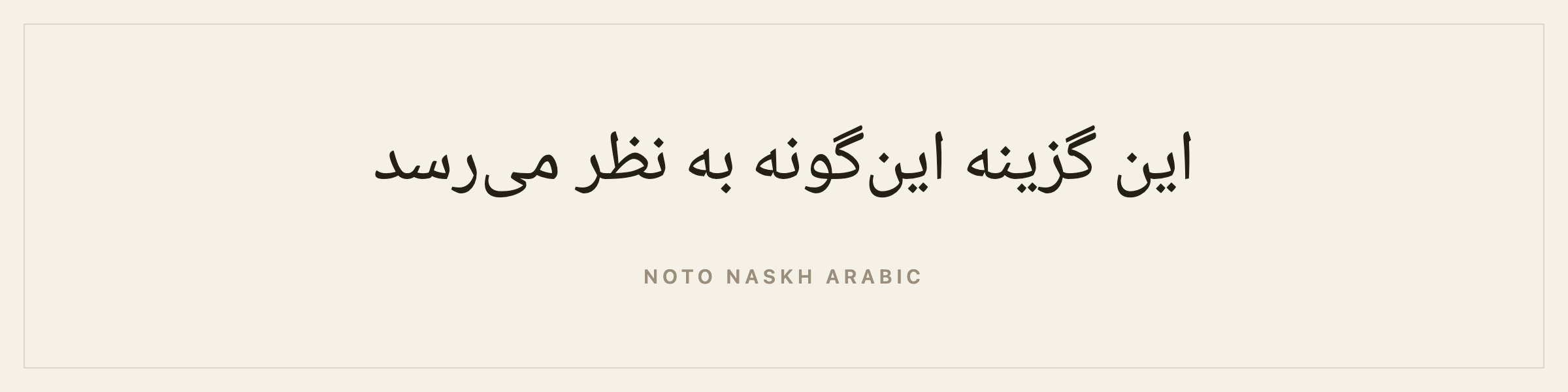
Noto Naskh Arabic is the safe default, with the broadest glyph coverage of the four.
Scheherazade New, from SIL, reaches furthest into the languages that borrow the Arabic script.
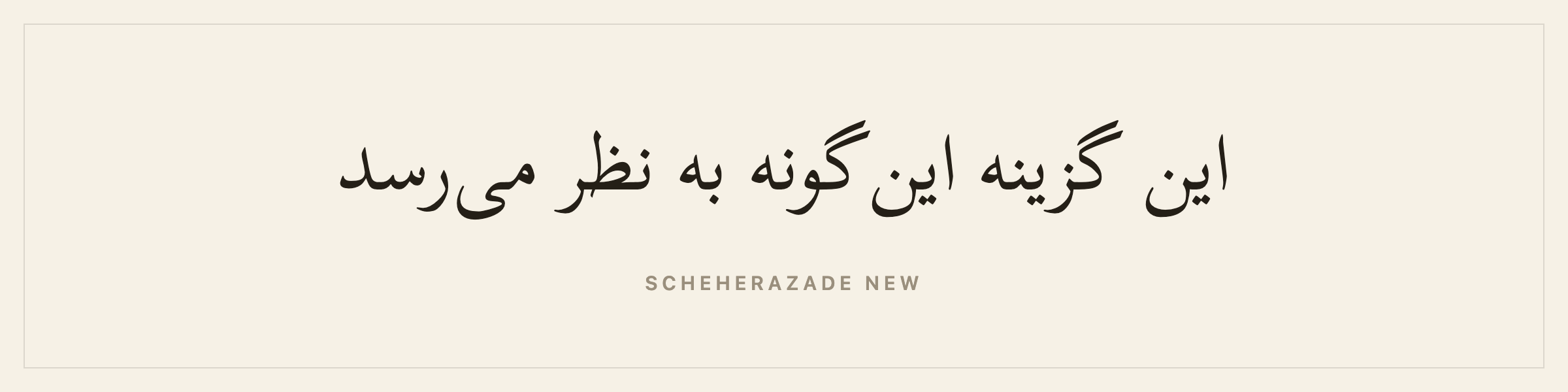
All four carry پ چ ژ گ and all four carry the Persian digits, so numbers come out in the forms a Persian reader expects. Coverage is the thing to check in any tool that offers you a font: a face cut for Arabic alone will not carry the four Persian letters, and a book that loses چ is not a book.
What you will not find here: Nazanin, Lotus, Mitra, Yagut. Nazanin in particular is the face a Persian reader has looked at their whole life, and it is licensed from Iranian foundries and costs money. Markazi is the closest available thing in the same tradition. The typeface documentation lists every face on the shelf, by language.
Exports for a Persian novel
Every export is built from the same book, so the Persian settings follow into all of them.
- Print-ready PDF. Your trim size, mirrored margins, a real gutter on the correct side, the font embedded. This is the file a printer takes.
- EPUB 3, with your cover, tagged
faso a reading device knows what it is holding, and carrying right-to-left page progression. - Store-ready EPUBs tuned per shop for Kindle, Kobo and Apple Books.
- Word and Markdown, for an editor who wants to track changes, or an archive.
- Manuscript format, double-spaced, and it runs right to left when the book does. The submission convention itself is still the English one.
- A proofreading PDF set two pages to a sheet for a red pen, and a large print PDF of the same book.
- A watermarked copy per beta reader, as a file or a link with their name on it.
There is also a KDP preflight that checks trim, margins, page count and metadata against Amazon’s rules before you upload, and a delivery readiness check that asks whether the book is actually finished or only feels finished.
Persian punctuation
Persian uses the Arabic comma ،, the question mark ؟ and the semicolon ؛. Quotations take guillemets, «گیومه», and Galley’s smart-quote rule knows that: type a straight quote in a Persian book and you get « and » rather than the curly Latin pair. The rule is per script, so it never has to guess.
Chapter headings are the honest gap. Galley writes “Chapter One” by default, and for Persian that is still the English default. Arabic-script ordinals inflect, and getting them right wants a native reader. So the app lets you title chapters yourself instead of shipping a guess. If you write in Persian and want to tell me what the convention should be, say so.
For the punctuation questions that are not script-specific, the dialogue punctuation rules and the dashes, hyphens and ellipses sheets cover the general cases.
How long a Persian novel is
Galley counts a Persian book in words, live, per chapter and per book, and the same number drives the reading-time estimate and the page-count projection. Persian has no single agreed novel length any more than English does, so the useful comparison is the one your own market makes.
If you want the details, the word count to page count converter turns a manuscript length into a page count at your trim, and novel word counts by genre gives the ranges publishers work to.
Trim sizes for a Persian book
Galley offers six standard trim sizes, from mass market at 4.25×6.87 inches to Royal at 6.14×9.21. None of them is called رقعی or وزیری, and it is worth knowing what the nearest equivalents are. رقعی runs roughly 14.5×21.5cm, which lands within about half a centimetre of the Digest at 5.5×8.5 inches. وزیری runs roughly 16.5×23.5cm, closest to Royal.
If you are printing with an Iranian press instead of a print-on-demand shop, ask them what they set before you choose, then match it. The book spine width calculator and the trim size comparison are there for the details.
Metadata and the copyright page
Your title, your name and your dedication are text like any other, and every field in the app auto-detects its own direction, so a Persian title in one field and a Latin ISBN in the next both come out right.
The copyright page builds itself from the metadata you already filled in. Two things to expect when you deal with a retailer: some storefronts want a Latin transliteration of your name or title in their own metadata fields, and an ISBN comes from the agency for your country of publication. The language of the book has nothing to do with it.
Typing Persian
Galley never uploads your text to check it. Spellcheck runs against your own browser’s dictionary, so a Persian book spellchecks if you have the Persian dictionary installed on your machine, and nothing leaves the page to make that happen. The same is true of every language the app knows.
Input works the way it does everywhere else in your browser, including with an IME. Autosave holds through a composition and saves when it finishes, so a half-composed word is never what gets written to the server.
Translating into or out of Persian
A translation in Galley is its own book. It gets its own language, its own typeface shelf, its own ISBN, its own cover and its own blurb, and it stays linked to the original so your dashboard does not fill up with near-copies. Open a chapter and the editor splits: the original read-only on the left, your translation on the right.
Translating your English novel into Persian therefore does not mean fighting a
tool that thinks every book is the English one. The Persian edition gets Markazi
or Amiri, runs right to left, gets tagged fa in the EPUB, and gets no
hyphenation, because none of that is right for English. It works the same way
going the other direction, and there are pages on
writing a novel in English and
writing a novel in Russian.
No machine touches the prose. Galley has no AI anywhere near your writing, which includes not offering to translate it for you.
Self-publishing and traditional publishing in Persian
Self-publishing. Amazon lists Persian for Kindle ebooks, paperbacks and hardcovers, which is better than several larger languages manage. Galley’s preflight checks the file against Amazon’s rules before you upload. Nothing in the app is Amazon-only, though: the same print PDF goes to IngramSpark, to a local press, or to a printer down the road, and the EPUB goes to any store that takes one.
Traditional publishing. A book published inside Iran needs a permit from the Ministry of Culture and Islamic Guidance, and a great deal of Persian-language fiction is published instead by diaspora presses in Europe and North America. Galley produces the file and the submission package, not the permission. What it gives you is a submission package with the synopsis, the bio and the opening chapters, and a manuscript in the format an editor asks for.
You do not have to choose at the start. The same book exports a submission and a print-ready interior, so trying one road and then the other costs you nothing. The longer arguments are in Galley for self-publishing and Galley for traditional publishing.
Where to go next
- Writing software for novelists who don’t write in English covers every script Galley sets, and says what is unfinished.
- Book design and typefaces lists every face by language, with the reasoning behind each one.
- Series and translations covers the full language list and the side-by-side view.
- From manuscript to published book is the whole route, in order.
Questions people ask about writing a novel in Persian
Can I write a novel in Persian in Galley?
Yes. Set the book's language to Persian on its metadata page and the whole app follows: the page runs right to left, the typeface shelf shows only faces that can set Persian, and the print PDF and EPUB are both built for a right-to-left book.
Which Persian fonts does Galley include?
Markazi Text, Amiri, Noto Naskh Arabic and Scheherazade New. All four are under the SIL Open Font License, so Galley can embed them in a PDF or EPUB you sell without a separate licence.
Does the print PDF handle right-to-left properly?
Yes. The gutter, running heads and page numbers mirror, chapters open on the left-hand page because that is the recto in a right-to-left book, and the PDF declares right-to-left page progression so a viewer pairs spreads correctly.
Is the half-space (نیمفاصله) preserved?
Yes. The zero-width non-joiner survives typing, pasting, saving and export, and the editor's Invisibles toggle shows it as a real mark instead of flagging it as stray whitespace.
Does Persian get italics?
No, and that is on purpose. Persian has no italic tradition, so the italic button is hidden on a Persian book instead of offering you a mechanically slanted Naskh.
Can I sell a Persian book on Amazon KDP?
Amazon lists Persian for Kindle ebooks, paperbacks and hardcovers. Galley's KDP preflight checks your trim, margins, page count and metadata against Amazon's rules before you upload.
Is the Galley interface available in Persian?
No. The interface is English and stays English. One person builds Galley, and a half-translated interface is worse than an English one. Your book is fully Persian.
Other languages
- Book writing software for RussianWrite and typeset a Russian novel: ten book faces with real Cyrillic italics, hyphenation by Russian rules, a print-ready PDF and an EPUB. Including the one thing Amazon will not do for you.
- Book writing software for EnglishWrite and typeset an English novel: fifteen book faces, British or American house style, a print-ready PDF for KDP or IngramSpark and a valid EPUB. One payment, no subscription, no AI in your prose.