Book writing software for writing a novel in Arabic
Galley has a complete Arabic print pipeline: right to left, real shaping, faces cut for Naskh, a print-ready PDF. Amazon sells Arabic as a Kindle ebook only and will not print it, which is the fact that decides where your paperback comes from.
كتابة رواية بالعربية
غالي برنامج لكتابة الرواية وإخراجها كتابًا. تكتب من الجملة الأولى على صفحة كتاب حقيقية: مقاسك، وهوامشك، والخط الذي سيُطبع به الكتاب.
النص يُصفّ من اليمين إلى اليسار، والحروف تتصل كما ينبغي، والخطوط هي التي تُصفّ بها الرواية العربية: أميري، ونسخ نوتو، وشهرزاد الجديد.
في النهاية تحصل على ملف PDF جاهز للطباعة وملف EPUB سليم، والخط مضمَّن داخلهما. واجهة البرنامج بالإنجليزية؛ والكتاب بالعربية.
Why Galley is the right book writing software for a novel in Arabic
Arabic is the hardest script on this shelf to typeset and the one with the strongest typographic tradition to live up to. Every letter takes a different shape depending on what sits beside it, four shapes for most letters, and the text runs right to left.
A browser does the shaping for free, which is why so many tools look like they support Arabic. Then you export, and the export is a fixed page where the tool has to do the shaping itself. Most PDF libraries fake it by mapping letters to a legacy presentation-forms block and looking those up in the font, which works until it meets a face that does not carry the legacy block, and then every letter comes out blank. Galley shapes with the book’s own script and direction passed through, which is the difference between a printed Arabic page and an empty one.
The second thing is the licence. Galley embeds the face inside your PDF and your EPUB, so every face on the shelf is one you may sell the book with.
The third is Amazon, and it is the one that changes your plan: KDP sells Arabic as a Kindle ebook and will not print it. No paperback, no hardcover. Galley still gives you a complete print PDF, because IngramSpark, a Cairo or Beirut press and a local printer are all still there and none of them asked Amazon.
Everything else is the same app: a true book page at your trim, the story bible beside the manuscript, a print-ready PDF and a valid EPUB.
How Arabic gets typeset
Direction is a print decision, not a screen decision. In a right-to-left book the leaves turn the other way, so the recto, the page a chapter opens on, is the left-hand page. The inside and outside margins swap with it, and the running heads and folios go with the gutter. The PDF declares right-to-left page progression and the EPUB carries the same on its spine. The file order never reverses.
Letters join, so headings must not letter-space. Tracking a cursive script open breaks the join, which reads as a fault. Chapter titles and scene headings on an Arabic book carry no tracking.
There is no italic. Arabic has no italic tradition, so the button is hidden and its shortcut unbound instead of offering a slanted Naskh. Existing marks in imported text are never stripped.
Justification does not use kashida, so set ragged right. There is no Arabic hyphenation either, and justification is off by default.
The digits are Arabic-Indic on screen and in the print PDF. They fall back to Western digits in the Word export only, because the Office file format has no Arabic-Indic numbering value to write.
Harakat fold in search, so a word is findable whether or not you typed the vowel marks.
The typefaces you get for Arabic
Three faces, all Naskh, which is the style Arabic books are set in, and all under the SIL Open Font License.
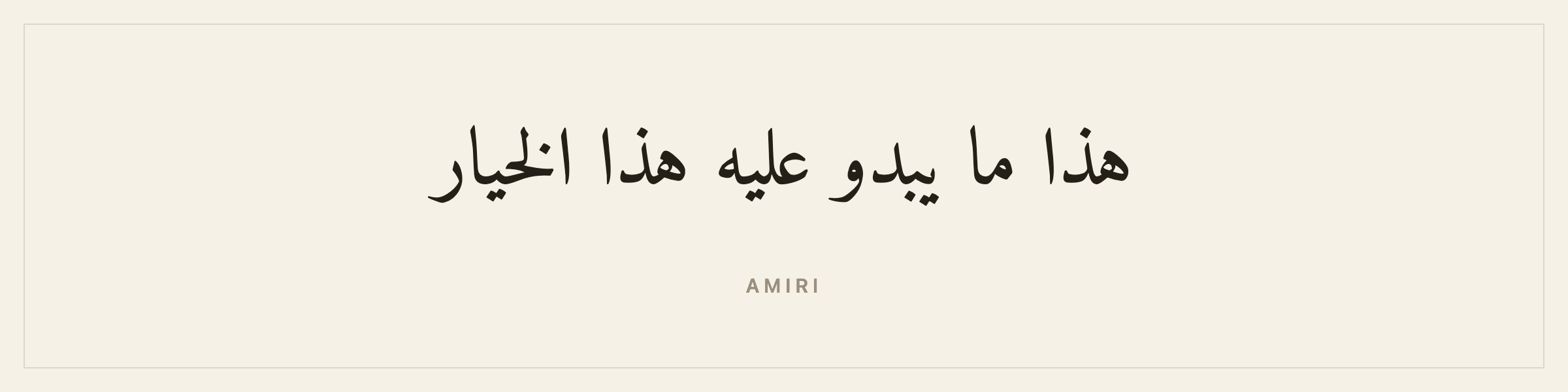
Amiri is the literary choice. It is modelled on the type cut for the Bulaq Press in nineteenth-century Cairo, and it is what an Arabic novel is supposed to look like.
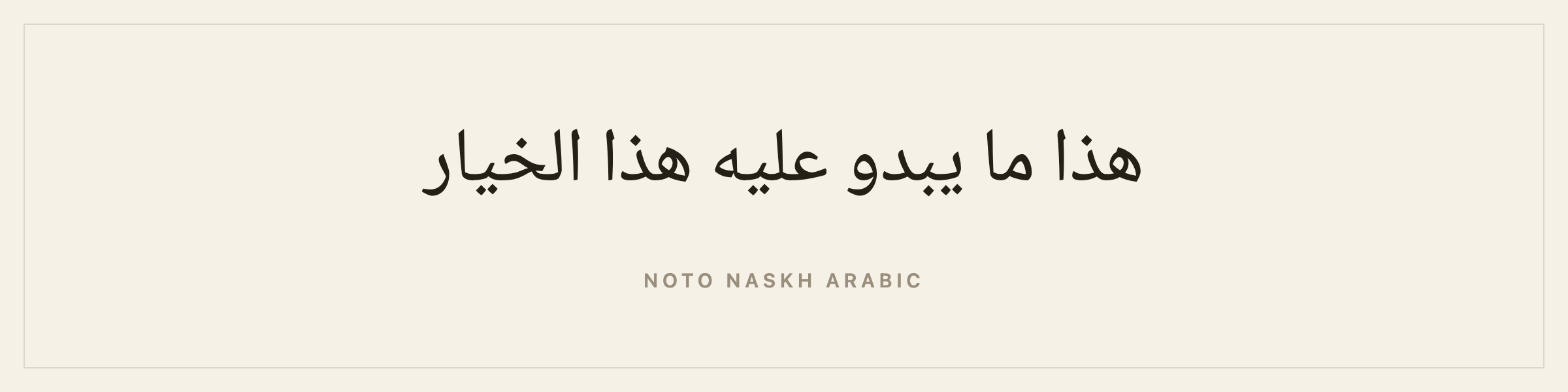
Noto Naskh Arabic is the safe default, with the broadest glyph coverage.
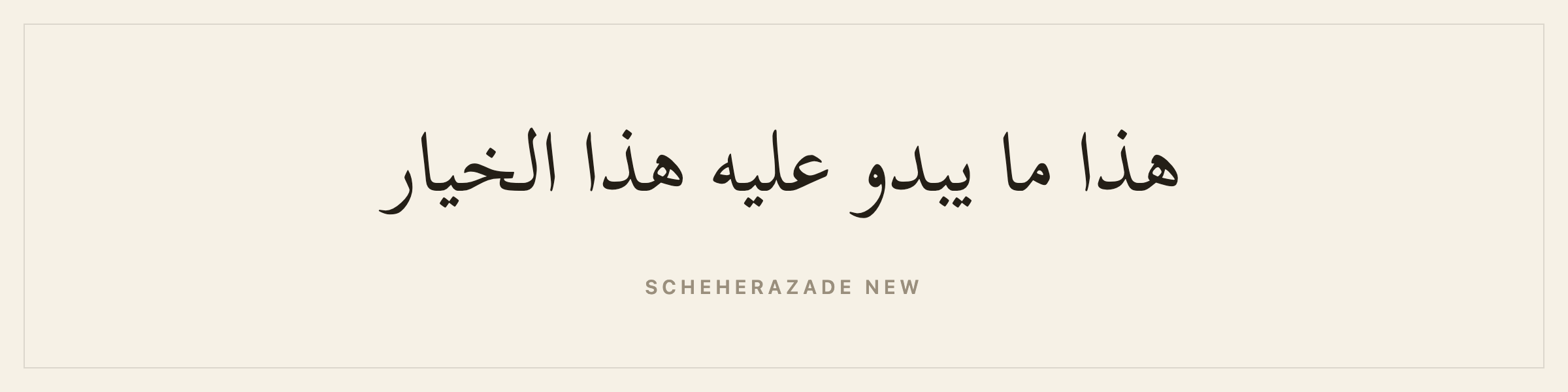
Scheherazade New, from SIL, reaches furthest into the languages that borrow the Arabic script.
What you will not find here: DecoType Naskh, Monotype Naskh, Simplified Arabic, the Boutros families. Arabic is the one script where the gap barely matters, because Amiri is a revival of a real press face and not a substitute for one. The typeface documentation lists every face by language.
Exports for an Arabic novel
- Print-ready PDF at your trim, mirrored the correct way, font embedded. This is the export that matters most in Arabic, given that Amazon will not print it.
- EPUB 3 with your cover, tagged
ar, with right-to-left page progression. - Store-ready EPUBs for Kindle, Kobo and Apple Books.
- Word and Markdown for an editor or an archive.
- Manuscript format, double-spaced, running right to left when the book does. The submission convention itself is still the English one.
- A proofreading PDF two pages to a sheet, and a large print PDF.
- A watermarked copy per beta reader.
Arabic punctuation
Arabic uses its own comma ،, question mark ؟ and semicolon ؛, all ordinary characters that survive typing and both exports.
Chapter headings are the honest gap. Galley writes “Chapter One” by default and for Arabic that is still the English default and not an Arabic ordinal. Arabic ordinals inflect and getting them right wants a native reader, not a guess, so the app lets you title chapters yourself instead of shipping something wrong. If you write in Arabic and want to tell me what it should be, say so.
How long an Arabic novel is
Arabic publishers quote length in words and in printed sheets. Galley counts your Arabic book in words, live, per chapter and per book, and projects a page count at your trim.
The word count to page count converter should be a helpful resource for you.
Trim sizes for an Arabic book
Six standards, from mass market at 4.25×6.87 inches to Royal at 6.14×9.21. Arabic trade fiction is commonly issued around 14×21cm, between the Digest at 5.5×8.5 inches and Royal. If you are printing with a press in Cairo, Beirut or the Gulf instead of print-on-demand, ask what they set and match it. The spine width calculator and the trim size comparison would be helpful here.
Metadata and the copyright page
Every field in the app detects its own direction, so an Arabic title in one field and a Latin ISBN in the next both come out right. The copyright page writes itself from the metadata you filled in. An ISBN comes from the agency for your country of publication, and some storefronts want a Latin transliteration of your name in their own fields.
Translating into or out of Arabic
A translation in Galley is its own book: its own language, its own typeface
shelf, its own ISBN, its own cover, still linked to the original, with the editor
split so the original sits read-only beside what you write. An Arabic edition of
an English novel gets Amiri, runs right to left, gets tagged ar and gets no
hyphenation, because none of that is right for English.
There are pages on writing a novel in Persian, writing a novel in Urdu and writing a novel in Kurdish, and for the languages that borrow the script further out, Pashto, Sindhi and Uyghur.
No machine touches the prose. Galley has no AI anywhere near your writing, which includes not offering to translate it.
Self-publishing and traditional publishing in Arabic
Self-publishing. The Kindle store takes Arabic ebooks. For print, Amazon is closed, so the print PDF goes to IngramSpark, to a regional press, or to a local printer. Nothing in the file is shaped for Amazon in particular.
Traditional publishing. Arabic trade publishing runs through houses in Cairo, Beirut and the Gulf, and through the prize circuit. The submission package assembles the synopsis, the bio and the opening chapters.
The same book exports both. The longer arguments are in Galley for self-publishing and Galley for traditional publishing.
Where to go next
- Writing software for novelists who don’t write in English covers every script Galley sets.
- Book design and typefaces lists every face by language.
- Series and translations covers the full language list.
- EPUB vs print PDF explains what each format can do.
Questions people ask about writing a novel in Arabic
Can I sell an Arabic book on Amazon KDP?
As a Kindle ebook only. Amazon lists Arabic for ebooks and will not print it as a paperback or a hardcover. Your print PDF still works, so the paperback comes from IngramSpark, a local press, or a printer of your choosing.
Which Arabic fonts does Galley include?
Amiri, Noto Naskh Arabic and Scheherazade New. All three are Naskh, which is the style Arabic books are set in, and all three are under the SIL Open Font License so Galley can embed them in a file you sell.
Does the print PDF handle right-to-left properly?
Yes. The gutter, running heads and page numbers mirror, chapters open on the left-hand page because that is the recto in a right-to-left book, and the PDF declares right-to-left page progression so a viewer pairs spreads correctly.
Does Arabic get italics?
No, and that is correct, and not a gap. Arabic has no italic tradition, so a slanted Naskh is a mistake and the italic button is hidden on an Arabic book.
Does Galley do kashida justification?
No. Traditional Arabic justification elongates the connecting strokes instead of stretching the word spaces, and Galley does not do that. Set an Arabic book ragged right, which is what most contemporary publishers do.
Other languages
- Book writing software for PersianWrite and typeset a Persian novel: right to left, set in Markazi Text or Amiri, with the half-space intact and a print-ready PDF at the end. What Persian asks of a book tool, and where most of them give up.
- Book writing software for UrduWrite and typeset an Urdu novel in Nastaliq, not Naskh: two cascading faces, right-to-left print, real shaping in the PDF, and an honest account of the gap that remains.
- Book writing software for KurdishWrite and typeset a Sorani Kurdish novel: right to left in the Arabic script, a Naskh face that carries the Kurdish letters, and a print-ready PDF.