Book writing software for writing a novel in Portuguese
Portuguese is two settings in Galley, not one. European Portuguese takes « » and hyphenates; Brazilian Portuguese takes the curly pair and has no hyphenation patterns, so set it ragged right. Amazon takes both in all three formats.
Escrever um romance em português
O Galley é onde escreves o romance e onde fazes o livro. Escreves desde a primeira frase numa página de livro a sério: o teu formato, as tuas margens, a tipografia do livro impresso.
As aspas seguem a variante que escolheres, há quinze tipos de letra para miolo, todos com licença livre para venderes o que imprimes.
No fim tens um PDF pronto para a gráfica e um EPUB válido. A interface está em inglês; o livro está em português.
Why Galley is the right book writing software for a novel in Portuguese
Portuguese is the language on this shelf where the variant changes the typesetting, and most tools treat it as one thing.
European Portuguese quotes in aspas angulares, « and ». Brazilian Portuguese quotes in the curly pair. Galley carries them as two separate languages, so the quote marks follow whichever you set, and a Brazilian edition of a Portuguese novel gets the Brazilian pair without you touching anything else.
Hyphenation splits the same way, and this one is a real gap, not a preference: Galley has hyphenation patterns for European Portuguese and none for Brazilian. If you are writing a Brazilian book, set it ragged right, which is what a lot of contemporary fiction does anyway. Justification is off by default, so the honest default is already the right one.
The third thing is the font licence. Galley embeds the face inside your PDF and your EPUB, so every face on the shelf is one you may sell the book with.
Everything else is the same app: a true book page at your trim, the story bible beside the manuscript, a print-ready PDF and a valid EPUB.
How Portuguese gets typeset
The variant is a language, not a checkbox. Set the book to Portuguese or to Portuguese (Brazil) on the metadata page and the quote marks, the hyphenation and the EPUB tag all follow from that one choice.
The diacritics go all the way through. Ã õ ç á â ê survive typing, autosave, search, the print PDF, the EPUB and the download filename.
Sorting is Portuguese, so a cast list comes out in the right order.
Italics work, and all fifteen faces carry a proper italic.
The typefaces you get for Portuguese
Fifteen faces, all under the SIL Open Font License.
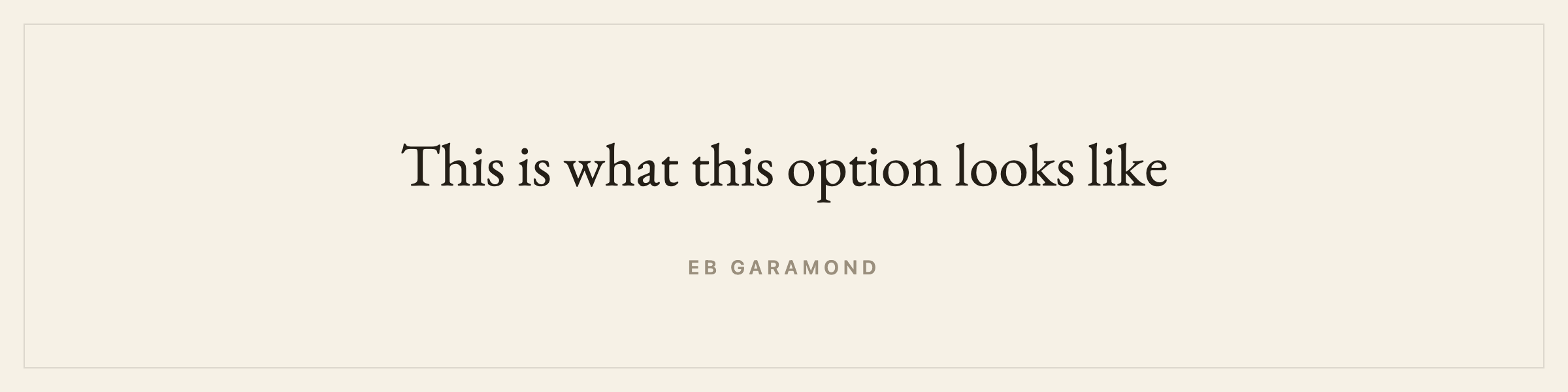
EB Garamond is the safe first choice for a novel in any Latin-script language.
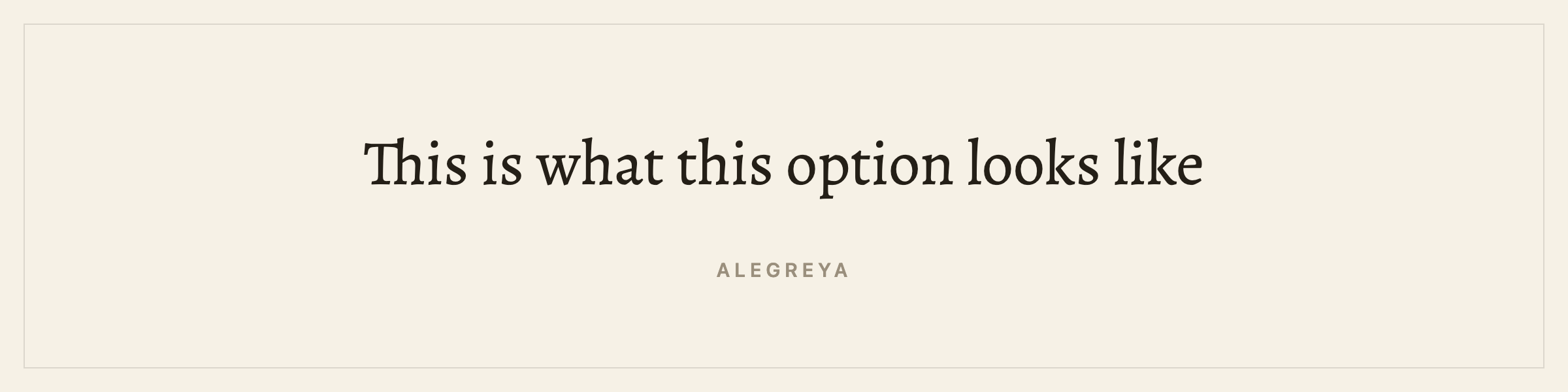
Alegreya was drawn for literature by a designer working in Spanish, and it handles Portuguese diacritics with the same care.
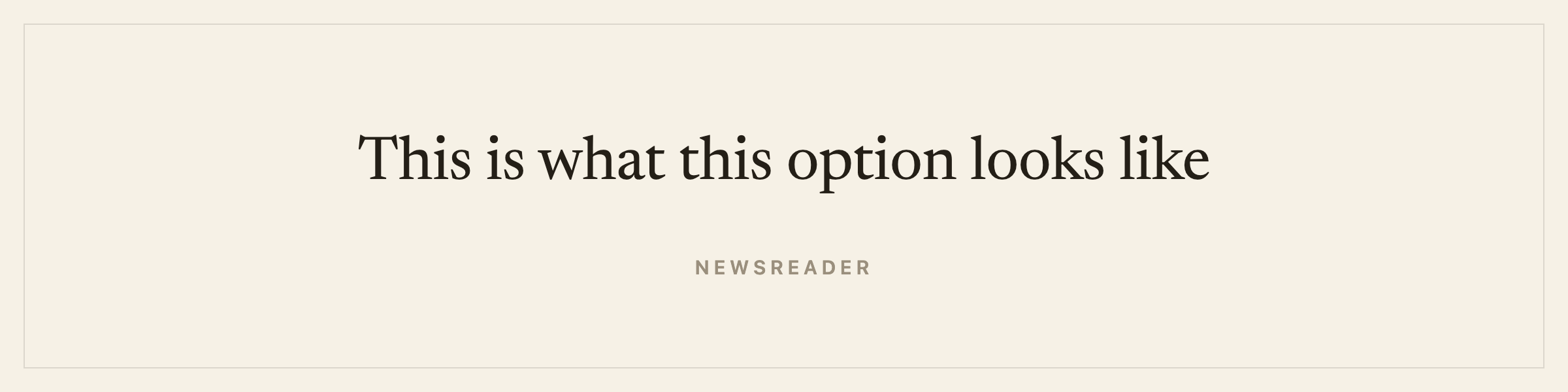
Newsreader was drawn for long-form reading and sets an even, unfussy page.
The rest of the shelf: Crimson Pro, Cormorant, Lora, Libre Baskerville, Literata, Source Serif 4, Spectral, Vollkorn, Cardo, Gentium Book Plus, Libre Caslon Text and Charis SIL. The typeface documentation lists every face by language.
Exports for a Portuguese novel
- Print-ready PDF at your trim, mirrored margins, real gutter, font embedded.
- EPUB 3 with your cover, tagged
ptorpt-BRas you set it. - Store-ready EPUBs for Kindle, Kobo and Apple Books.
- Word and Markdown for a revisor or an archive.
- Manuscript format, double-spaced.
- A proofreading PDF two pages to a sheet, and a large print PDF.
- A watermarked copy per beta reader.
The KDP preflight checks the file first.
Portuguese punctuation
Quotes you get automatically, in the pair your variant uses. The travessão is yours: Brazilian fiction opens dialogue with it at the head of the line, and it comes through untouched.
The Acordo Ortográfico of 1990 is a spelling question rather than a typesetting one, and it is exactly what the style sheet in the story bible is for. Record which side you are writing on and use book-wide find and replace when you catch yourself drifting.
The dialogue punctuation rules and dashes, hyphens and ellipses sheets cover the general cases.
How long a Portuguese novel is
Portuguese quotes length in palavras and in laudas, where a lauda in the Brazilian trade is commonly 1,400 to 1,500 characters with spaces. Galley counts words, so expect to convert.
Portuguese also runs longer than English at the same story length, typically by fifteen per cent or so in translation, which changes your page count and your spine. The word count to page count converter and novel word counts by genre do the maths.
Trim sizes for a Portuguese book
Six standards, from mass market at 4.25×6.87 inches to Royal at 6.14×9.21. Brazilian trade fiction is commonly issued around 14×21cm and Portuguese around 15.5×23.5cm, which land between the Digest at 5.5×8.5 inches and Royal.
The spine width calculator and the trim size comparison would be helpful here.
Metadata and the copyright page
The copyright page writes itself from the metadata you filled in. The ISBN agency is national, so a Portuguese ISBN and a Brazilian one are separate registrations even for the same text. If you plan to sell on both sides, decide that early; whether you need an ISBN covers when you do.
Translating into or out of Portuguese
A translation in Galley is its own book: its own language, its own typeface shelf, its own ISBN, its own cover, still linked to the original. That includes the case people hit most in Portuguese, which is a Brazilian edition of a European book. It is a translation in Galley’s sense, gets its own quote marks and its own tag, and sits under the original in your dashboard.
There are pages on writing a novel in Spanish, writing a novel in Galician and writing a novel in French.
No machine touches the prose. Galley has no AI anywhere near your writing.
Self-publishing and traditional publishing in Portuguese
Self-publishing. Amazon takes both variants in all three formats, and amazon.com.br is a real market. The same print PDF goes to a Brazilian or Portuguese printer just as well.
Traditional publishing. The Brazilian and Portuguese trades are separate markets with separate rights, which is worth knowing before you sign anything. The submission package assembles the synopsis, the bio and the opening chapters.
The same book exports both. The longer arguments are in Galley for self-publishing and Galley for traditional publishing.
Where to go next
- Writing software for novelists who don’t write in English covers every script Galley sets.
- Book design and typefaces lists every face by language.
- Series and translations covers the full language list.
- EPUB vs print PDF explains what each format can do.
Questions people ask about writing a novel in Portuguese
Does Galley separate European and Brazilian Portuguese?
Yes, they are two languages in the app. European Portuguese gets « » quote marks and hyphenation patterns. Brazilian Portuguese gets the curly pair and no hyphenation, so set a Brazilian book ragged right or accept looser justification.
Which quote marks will I get?
« and » on a European Portuguese book, “ and ” on a Brazilian one. Both follow the book's language setting, so a translation in the other variant gets the other pair.
Can I sell a Portuguese book on Amazon KDP?
Yes, in all three formats: Kindle ebook, paperback and hardcover, for both variants.
What about the travessão for dialogue?
It is a character you type, and Galley leaves it alone. It survives typing, autosave, the print PDF, the EPUB and the Word file.
Other languages
- Book writing software for SpanishWrite and typeset a Spanish novel: comillas latinas as you type, hyphenation by Spanish rules, fifteen book faces, and a print-ready PDF for Amazon, a Spanish printer or a Latin American one.
- Book writing software for GalicianWrite and typeset a Galician novel: guillemets as you type, Galician hyphenation, fifteen book faces licensed for sale, and a print-ready PDF for Amazon or a Galician printer.
- Book writing software for FrenchWrite and typeset a French novel: guillemets that appear when you type a quote, hyphenation by French rules, fifteen book faces and a print-ready PDF. Including what French typography asks for that no tool does automatically.