Book writing software for writing a novel in Spanish
Type a straight quote in a Spanish book and you get « and », the pair the RAE prefers. Hyphenation runs on Spanish patterns, the raya you use for dialogue comes through untouched, and Amazon takes Spanish in all three formats on both sides of the Atlantic.
Escribir una novela en español
Galley es donde escribes la novela y donde haces el libro. Escribes desde la primera frase sobre una página de libro real: tu formato, tus márgenes, la tipografía del libro impreso.
Las comillas son latinas, la partición de palabras sigue las reglas del español, y hay quince tipografías de libro, todas con licencia libre para vender lo que imprimas.
Al final tienes un PDF listo para imprenta y un EPUB válido. La interfaz está en inglés; el libro está en español.
Why Galley is the right book writing software for a novel in Spanish
Spanish asks for three things at the punctuation level that an English-first tool gets wrong by default, and none of them show up until somebody reads the proof.
The quotes come first. A Spanish novel takes comillas latinas, « and », and most software hands you the English curly pair because the smart-quote rule was written once for English. Galley picks the pair from the book’s language, so a Spanish book gets « as you type and an English one in the same account does not.
The raya is second. Spanish dialogue runs on the raya at the head of the line and around interventions, and it is a specific character with specific spacing. It is yours to type and Galley leaves it alone, which is the correct behaviour and more than some tools manage: a smart-punctuation rule that converts it to something else is worse than none.
The inverted marks are third. ¿ and ¡ are ordinary characters here and they survive typing, search, sorting and both exports.
The rest is the same app: a true book page at your trim size, the story bible beside the manuscript, and a print-ready PDF and valid EPUB at the end.
How Spanish gets typeset
Hyphenation follows Spanish rules and applies in the justified print PDF. Justification is off by default.
Accents and the eñe go all the way through, including into the download filename, so a book called El Año del Silencio arrives under its own name.
Sorting is Spanish. A cast list or a glossary sorts in the Spanish alphabet.
Italics work, on a drawn italic in all fifteen faces, which matters because Spanish uses italics for the same jobs English does.
The typefaces you get for Spanish
Fifteen faces, all under the SIL Open Font License. Five are recommended.
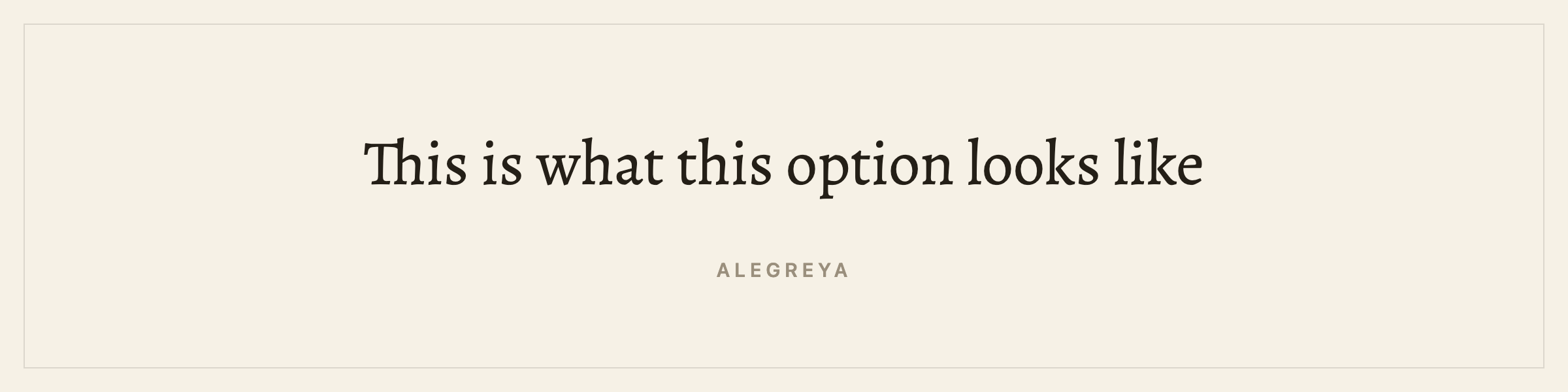
Alegreya is the one to look at first. It was drawn in Argentina by Juan Pablo del Peral, specifically for literature, and it was designed with Spanish text in front of it.
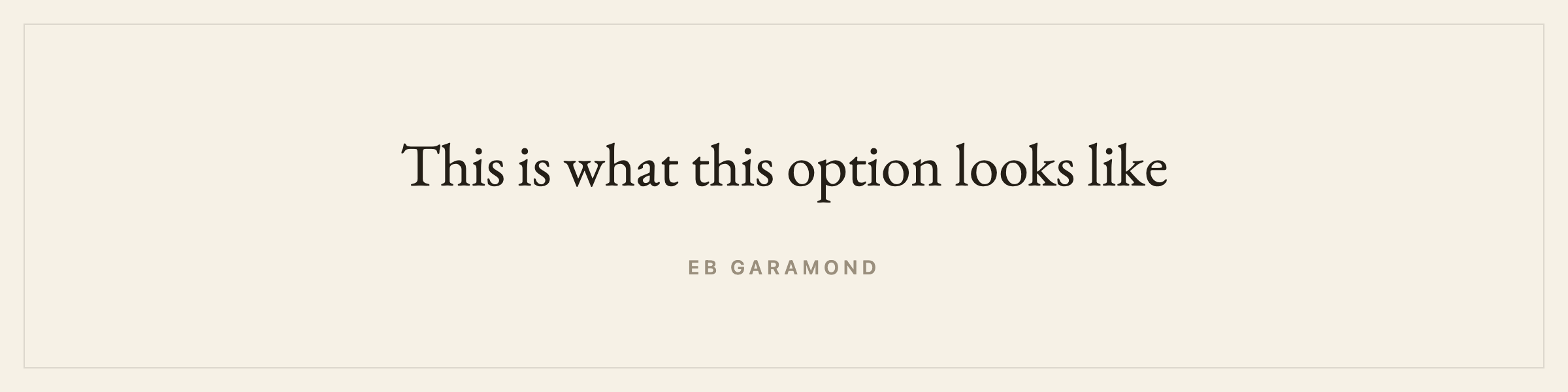
EB Garamond is the safe classic.
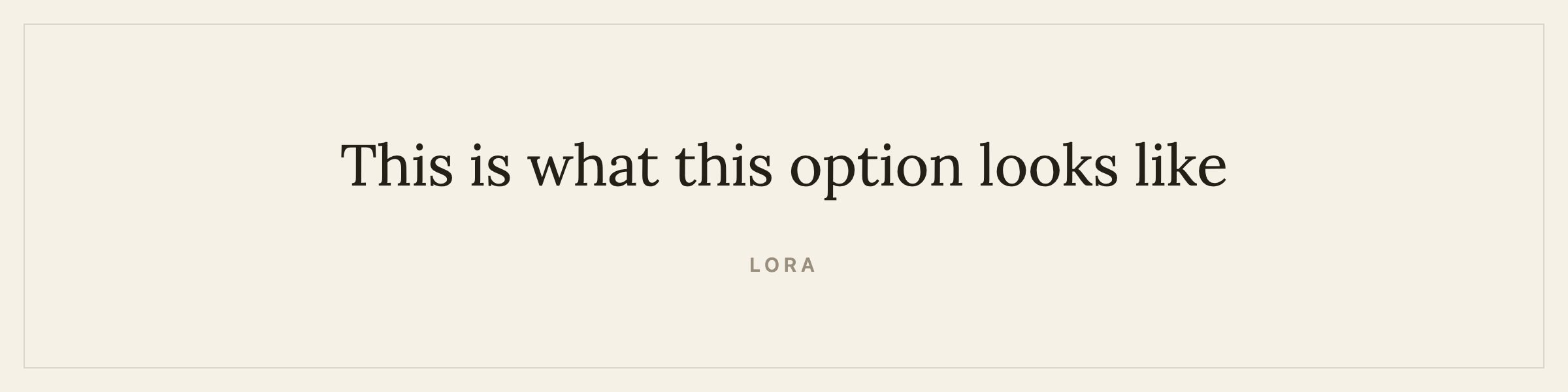
Lora is contemporary, with brushed serifs that hold at small sizes.
The rest of the shelf: Crimson Pro, Cormorant, Libre Baskerville, Literata, Source Serif 4, Spectral, Vollkorn, Cardo, Gentium Book Plus, Newsreader, Libre Caslon Text and Charis SIL.
What you will not find here: Fedra, Chaparral, Meta Serif and the rest of the proprietary shelf a Spanish production department would reach for. The typeface documentation lists every face by language.
Exports for a Spanish novel
- Print-ready PDF at your trim, mirrored margins, real gutter, font embedded.
- EPUB 3 with your cover, tagged
es. - Store-ready EPUBs for Kindle, Kobo and Apple Books.
- Word and Markdown for a corrector or an archive.
- Manuscript format, double-spaced.
- A proofreading PDF two pages to a sheet, and a large print PDF.
- A watermarked copy per beta reader.
The KDP preflight checks the file first.
Spanish punctuation
The comillas you get automatically. Everything else is convention you carry, and the three worth naming are the raya for dialogue, the inverted opening marks, and the fact that Spanish puts the full stop outside a closing quotation mark where English usually puts it inside.
The dialogue punctuation rules sheet covers speech across conventions, and dashes, hyphens and ellipses covers which dash the raya actually is.
How long a Spanish novel is
Spanish publishing quotes length in palabras or in páginas, and the useful number is words. Literary and commercial fiction lands broadly where English does, between 80,000 and 100,000 words, with a long tail either side.
Spanish also expands against English: a translated Spanish edition typically runs fifteen to twenty per cent longer than its English original, which changes your page count and therefore your printing cost. The word count to page count converter and novel word counts by genre do the sums.
Trim sizes for a Spanish book
Six standards, from mass market at 4.25×6.87 inches to Royal at 6.14×9.21. Spanish trade fiction is commonly issued around 14×21cm, between the Digest at 5.5×8.5 inches and Royal, and the bolsillo runs near 11×18cm.
The spine width calculator and the trim size comparison would be helpful here.
Metadata and the copyright page
The copyright page writes itself from the metadata you filled in. An ISBN comes from the agency for the country you publish in, so a Spanish ISBN and a Mexican or Argentinian one are different registrations for what may be the same book. If you are selling into several Spanish-speaking markets, that is the decision to make early, and whether you need an ISBN covers when you do.
Translating into or out of Spanish
A translation in Galley is its own book: its own language, its own typeface shelf, its own ISBN, its own cover, still linked to the original, with the editor split so the original sits read-only beside what you write.
There are pages on writing a novel in French, writing a novel in Portuguese and writing a novel in Catalan if that is your direction.
No machine touches the prose. Galley has no AI anywhere near your writing.
Self-publishing and traditional publishing in Spanish
Self-publishing. Amazon takes Spanish in all three formats and sells it in Spain, Mexico, the United States and elsewhere. The same print PDF goes to a Spanish or Latin American printer just as well.
Traditional publishing. The Spanish-language trade runs through agencies more than the Anglophone one does, and the big houses read through them. The submission package assembles the synopsis, the bio and the opening chapters.
The same book exports both, so you are not choosing on day one. The longer arguments are in Galley for self-publishing and Galley for traditional publishing.
Where to go next
- Writing software for novelists who don’t write in English covers every script Galley sets.
- Book design and typefaces lists every face by language.
- Series and translations covers the full language list.
- Book typography basics is the set of rules that makes a page look made.
Questions people ask about writing a novel in Spanish
Does Galley use comillas latinas?
Yes. Set the book's language to Spanish and a straight double quote becomes « or » as you type, which is the pair the Real Academia prefers. If your house sets curly quotes instead, type them.
What about the raya for dialogue?
The raya is a character you type, and it comes through typing, autosave and both exports unchanged. Galley does not convert it or reflow around it.
Does Galley hyphenate Spanish?
Yes, on Spanish patterns, and only in the print PDF when you justify. Justification is off by default.
Can I sell a Spanish book on Amazon KDP?
Yes, in all three formats: Kindle ebook, paperback and hardcover, on amazon.es and amazon.com among others.
Is the Galley interface in Spanish?
No. The interface is English and stays English. One person builds Galley. Your book is entirely Spanish.
Other languages
- Book writing software for FrenchWrite and typeset a French novel: guillemets that appear when you type a quote, hyphenation by French rules, fifteen book faces and a print-ready PDF. Including what French typography asks for that no tool does automatically.
- Book writing software for PortugueseWrite and typeset a Portuguese novel, European or Brazilian: the right quote marks for your side of the Atlantic, hyphenation for Portugal, fifteen book faces and a print-ready PDF.
- Book writing software for CatalanWrite and typeset a Catalan novel: cometes baixes as you type, the punt volat handled as a letter, Catalan hyphenation and a print-ready PDF for Amazon or a Catalan printer.