Book writing software for writing a novel in French
Type a straight quote in a French book and you get « and », because the quote marks follow the language. Hyphenation runs on French patterns, the print PDF embeds a face licensed for you to sell, and Amazon takes French in all three formats. The spaces inside the guillemets are still yours to put in.
Écrire un roman en français
Galley sert à écrire un roman et à en faire un livre. Vous écrivez dès la première phrase sur une vraie page de livre : votre format, vos marges, la police du livre imprimé.
Les guillemets sont français, la césure suit les règles françaises, et quinze polices de labeur sont disponibles, toutes libres de droits pour la vente.
À la sortie : un PDF prêt pour l'imprimeur et un EPUB valide. L'interface est en anglais, le livre est en français.
Why Galley is the right book writing software for a novel in French
French is easy for a tool to render and hard for a tool to typeset, and almost nobody notices the difference until the proof comes back.
Start with the quotes. A French novel is quoted in guillemets and most software gives you the English pair, because the smart-quote rule was written once for English and never asked what language you were in. Galley asks. Set the book to French and a straight double quote becomes « or » as you type, while an English book in the same account keeps its curly pair.
Then hyphenation. French justified without hyphenation is not as ugly as German, but it is ugly, and the fix has to know French. Galley carries French patterns and applies them in the print PDF when you justify.
Then the font. Galley embeds the face inside your PDF and your EPUB, which is redistribution, so every face on the shelf is licensed for you to sell the result. Most tools ship you type you are not allowed to distribute and do not mention it.
The rest is the same app everyone gets: a true book page at your trim size, the story bible beside the manuscript, a print-ready PDF and a valid EPUB at the end.
How French gets typeset
Accents are not a plugin. É À Ç Œ Æ and the ligatures come through typing, autosave, search and both exports. Search folds accents so elève finds élève, which is what you want when you are hunting a name you spelled two ways.
Hyphenation follows French rules, not English ones, and only when you justify. A French compositor breaks on syllables and refuses to leave a one-letter fragment; the patterns encode that.
Italics work. French is one of the four scripts on the shelf with a real italic tradition, and all fifteen faces ship a drawn italic.
Sorting is French. A cast list or a glossary sorts in the French alphabet, so accented forms land where a French reader expects them.
The typefaces you get for French
Fifteen faces, every one cut for long-form reading on paper, every one under the SIL Open Font License. Five are recommended.
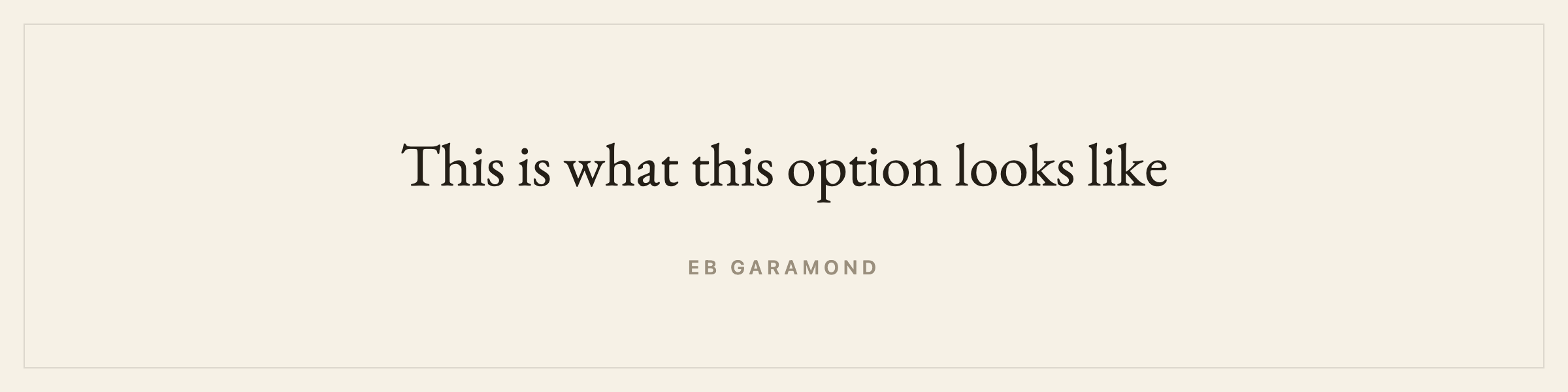
EB Garamond is the obvious first choice, and it is more French than most of the shelf: Claude Garamond cut the original in Paris in the 1540s.
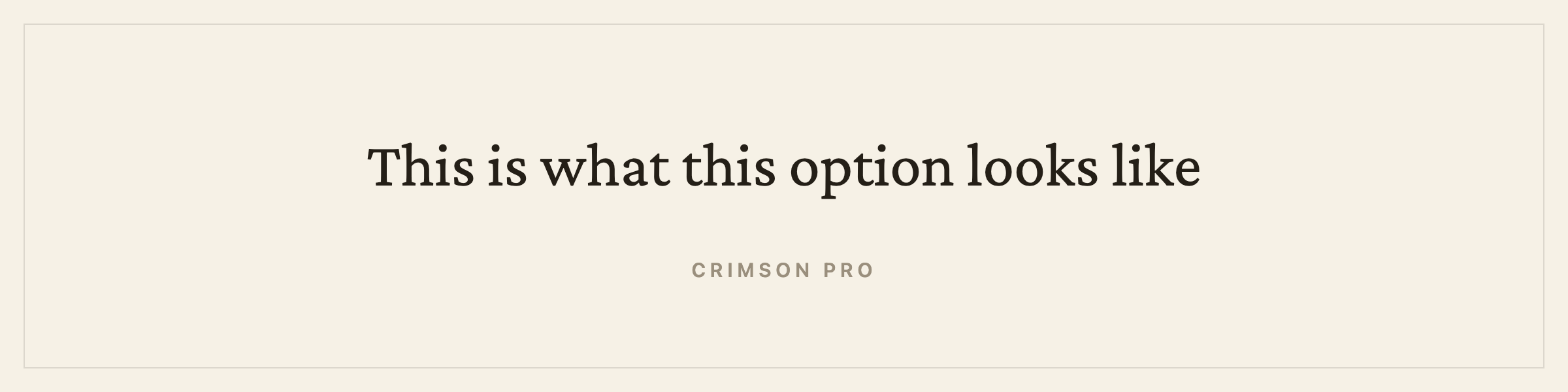
Crimson Pro sits in the same oldstyle tradition as Minion.
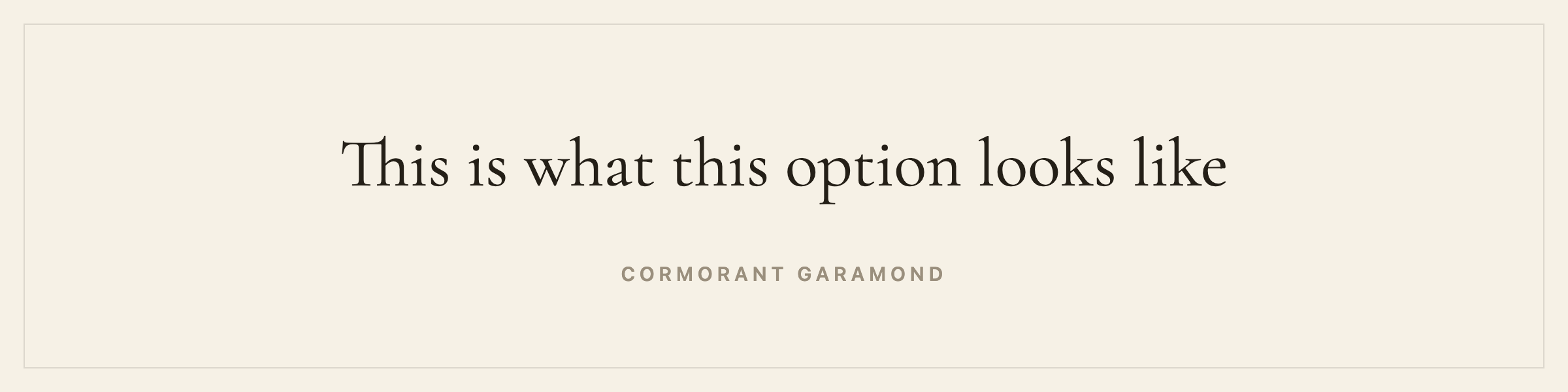
Cormorant is a high-contrast Garamond, beautiful at a chapter opening and light for a whole novel at body size.
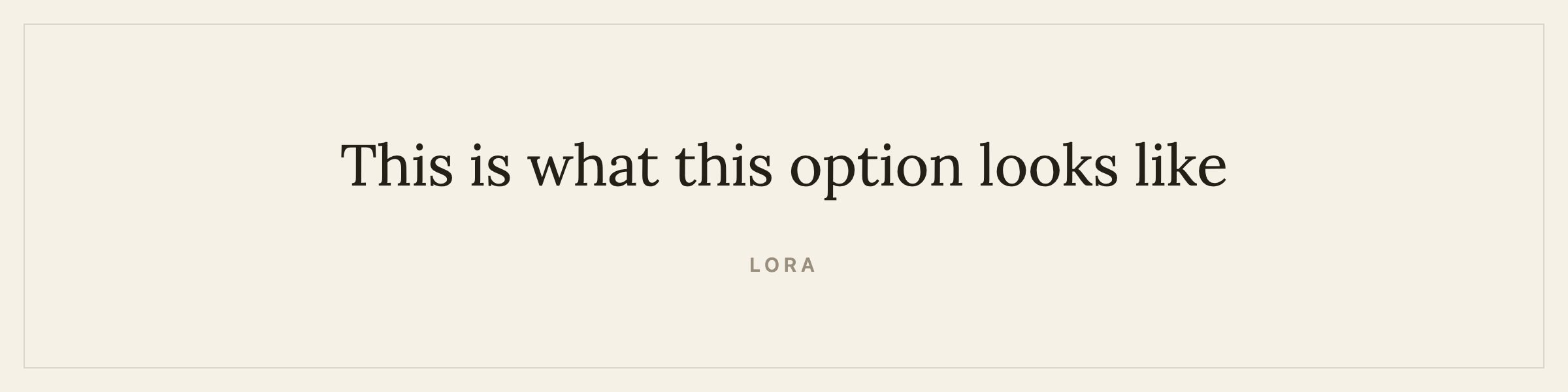
Lora is contemporary, with brushed serifs that hold at small sizes.
Libre Baskerville is Baskerville, set a little wider for reading.
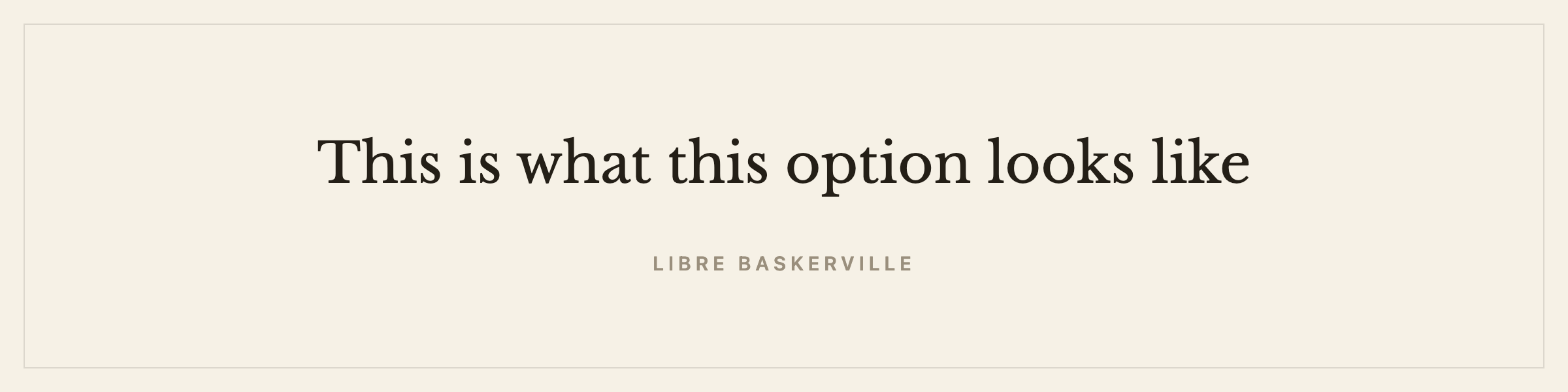
The rest of the shelf: Literata, Source Serif 4, Spectral, Alegreya, Vollkorn, Cardo, Gentium Book Plus, Newsreader, Libre Caslon Text and Charis SIL. Source Serif 4 comes out of Fournier, another Parisian punchcutter, so it has a claim here too.
What you will not find here: Sabon, Garamond Premier, Le Monde Livre, Mercure. Every one is proprietary and would put a per-title bill between you and your own book. The typeface documentation lists all of them by language.
Exports for a French novel
- Print-ready PDF at your trim, with mirrored margins, a real gutter and the font embedded, hyphenated on French patterns if you justify.
- EPUB 3 with your cover, tagged
fr. - Store-ready EPUBs tuned for Kindle, Kobo and Apple Books.
- Word and Markdown for an editor or an archive.
- Manuscript format, double-spaced.
- A proofreading PDF two pages to a sheet, and a large print PDF.
- A watermarked copy per beta reader, as a file or a link.
The KDP preflight checks the file against Amazon’s rules before you upload, and the delivery readiness check asks whether the book is finished.
French punctuation
Guillemets you get automatically. The spaces are the part no software does for
you, and French typography wants a thin non-breaking space before ; : ?
! and inside « ». Galley does not insert them, so type them, and use the
editor’s Invisibles toggle to check they are there. They survive into the print
PDF and the EPUB, which is the part that matters.
Dialogue is the other French habit worth naming. A lot of French fiction opens speech with a tiret cadratin at the head of the line instead of quoting it, and some novels mix the two. Both are characters you type and both come through unchanged.
For the cases that are not French-specific, the dialogue punctuation rules and the dashes, hyphens and ellipses sheets cover the general ground.
How long a French novel is
French publishing counts in signes rather than words. A feuillet is 1,500 signes including spaces, and a manuscript is quoted in feuillets when an editor asks how long it is. Galley counts your book in words, live, per chapter and per book, so you will be converting: roughly 6 to 6.5 characters per word with spaces, which puts a 90,000 word novel somewhere near 360 feuillets.
For the maths, the word count to page count converter and novel word counts by genre both help.
Trim sizes for a French book
Galley offers six standards, from mass market at 4.25×6.87 inches to Royal at 6.14×9.21. French trade fiction is commonly issued around 14×20.5cm, which sits between the Digest at 5.5×8.5 inches and Royal, and the poche format runs near 11×18cm, close to mass market.
Trim decides page count and page count decides your spine. The spine width calculator and the trim size comparison would be helpful here, and choosing a trim size is the longer argument.
Metadata and the copyright page
The copyright page writes itself from the metadata you already filled in: your name, the year, the ISBN, the edition. A French ISBN comes from the AFNIL, and whether you need one at all depends on where you are selling.
One thing specific to France: the prix unique du livre fixes the retail price of a book across every seller, and it applies to you as a self-publisher too. Set the price once and it is the price everywhere.
Translating into or out of French
A translation in Galley is its own book: its own language, its own typeface shelf, its own ISBN, its own cover, still linked to the original. Open a chapter and the editor splits, original read-only on the left, your translation on the right.
The French edition of an English novel therefore gets French guillemets, French
hyphenation and a fr tag, without you fighting a tool that assumes every book
is the English one. There are pages on
writing a novel in Spanish,
writing a novel in Italian and
writing a novel in German if the other
direction is where you are going.
No machine touches the prose. Galley has no AI anywhere near your writing, which includes not offering to translate it.
Self-publishing and traditional publishing in French
Self-publishing. Amazon takes French as a Kindle ebook, a paperback and a hardcover, so every route is open. The same print PDF goes to a French printer or to IngramSpark, and nothing in the file is shaped for Amazon in particular.
Traditional publishing. French houses want a manuscript, a synopsis and a covering letter, and the submission package assembles all three. The contrat d’édition is a different animal from an Anglophone contract and worth reading with someone who knows it.
You do not choose at the start. The same book exports a submission and a print-ready interior. The longer arguments are in Galley for self-publishing and Galley for traditional publishing.
Where to go next
- Writing software for novelists who don’t write in English covers every script Galley sets.
- Book design and typefaces lists every face by language.
- Series and translations covers the full language list and the side-by-side view.
- Book typography basics is the set of rules that makes a page look professionally made.
Questions people ask about writing a novel in French
Does Galley use French guillemets?
Yes. Set the book's language to French and a straight double quote becomes « or » as you type. The rule follows the language, so an English book in the same account still gets curly quotes.
Does Galley hyphenate French?
Yes, on French patterns, and only in the print PDF when you justify. Justification is off by default.
Can I sell a French book on Amazon KDP?
Yes, in all three formats: Kindle ebook, paperback and hardcover. The KDP preflight checks your trim, margins, page count and metadata before you upload.
Does Galley insert the thin non-breaking spaces French typography wants?
No. The space before a semicolon, colon, question mark or exclamation mark, and inside guillemets, is yours to type. The editor's Invisibles toggle shows non-breaking spaces so you can see where they are, and they survive into the PDF.
Is the Galley interface in French?
No. The interface is English and stays English. One person builds Galley. Your book is entirely French.
Other languages
- Book writing software for SpanishWrite and typeset a Spanish novel: comillas latinas as you type, hyphenation by Spanish rules, fifteen book faces, and a print-ready PDF for Amazon, a Spanish printer or a Latin American one.
- Book writing software for ItalianWrite and typeset an Italian novel: caporali as you type, hyphenation by Italian rules, fifteen book faces licensed for sale, and a print-ready PDF for Amazon or an Italian printer.
- Book writing software for GermanWrite and typeset a German novel: „Anführungszeichen“ as you type, hyphenation that copes with compound nouns, fifteen book faces and a print-ready PDF for KDP or a German printer.