Book writing software for writing a novel in Italian
Type a straight quote in an Italian book and you get « and », the caporali Italian fiction is set with. Hyphenation runs on Italian patterns, accented vowels survive to the filename, and Amazon takes Italian in all three formats.
Scrivere un romanzo in italiano
Con Galley scrivi il romanzo e ne fai il libro. Scrivi dalla prima frase su una vera pagina di libro: il tuo formato, i tuoi margini, il carattere del libro stampato.
Le virgolette sono caporali, la sillabazione segue le regole italiane, e ci sono quindici caratteri da libro, tutti con licenza libera per la vendita.
Alla fine hai un PDF pronto per la stampa e un EPUB valido. L'interfaccia è in inglese; il libro è in italiano.
Why Galley is the right book writing software for a novel in Italian
Italian fiction is quoted in caporali, « and », and almost every writing tool hands you the English curly pair instead. The smart-quote rule in most software was written once, for English, and never asked what language the book was in. Galley asks. Set the book to Italian and you get caporali as you type.
The second thing is hyphenation. Italian justified without it is not disastrous, because the words are shorter than German, and it is still visibly worse. Galley carries Italian patterns and uses them in the print PDF when you justify.
The third is the font licence. Galley embeds the face inside your PDF and your EPUB, which is redistribution, so every face on the shelf is one you are allowed to sell the book with. A tool that ships you Sabon and says nothing has handed you a problem, not a feature.
Everything else is the same app: a true book page at your trim, the story bible beside the manuscript, a print-ready PDF and a valid EPUB.
How Italian gets typeset
Hyphenation follows Italian rules, in the justified print PDF only.
Accented vowels go all the way through, including into the download filename, so a book called Le Città Sospese arrives under its own name.
Sorting is Italian, so a cast list or a glossary comes out in the order an Italian reader expects.
Italics work. Every face here ships a real italic rather than a computed slope.
The typefaces you get for Italian
Fifteen faces, all under the SIL Open Font License. Italian has the strongest claim of any language here, because the roman letter as we set it was cut in Venice.
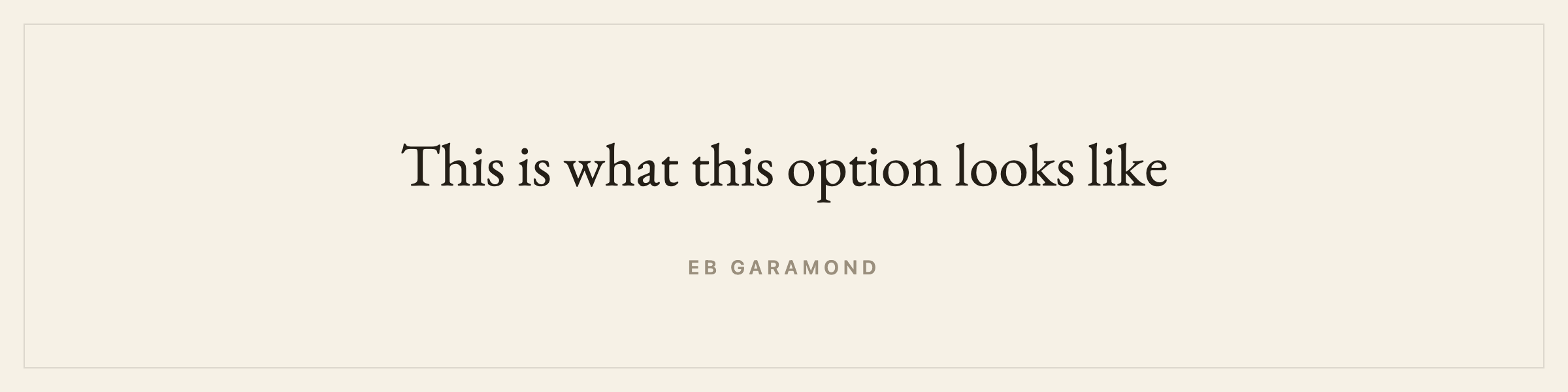
EB Garamond descends from the types Claude Garamond cut after Griffo’s Venetian romans.
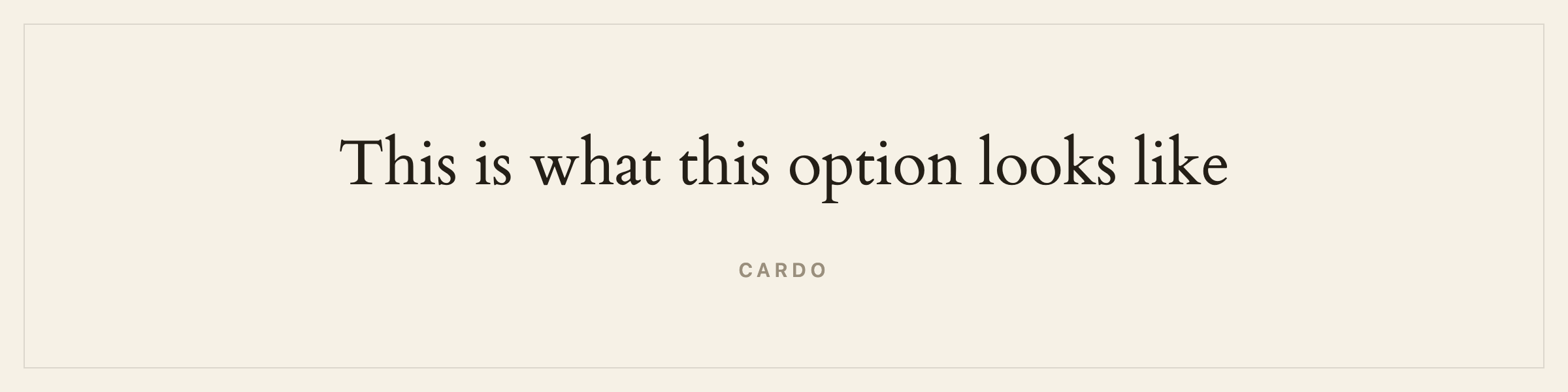
Cardo follows Bembo, which is Griffo’s type for Aldus Manutius, printed in Venice in 1495. It is the closest thing on the shelf to an Italian book face.
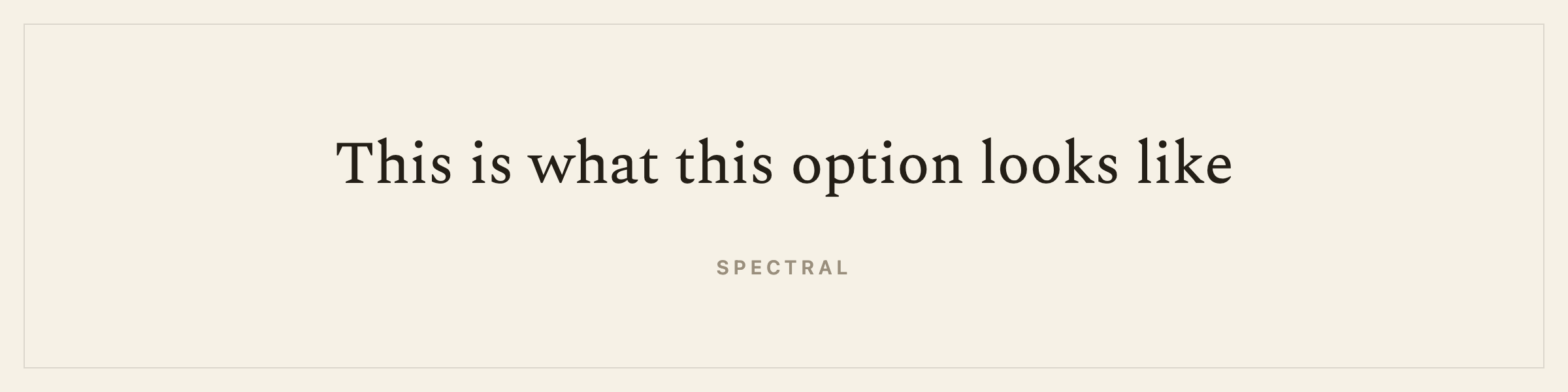
Spectral was drawn for long-form reading and sets a clean, even page.
The rest of the shelf: Crimson Pro, Cormorant, Lora, Libre Baskerville, Literata, Source Serif 4, Alegreya, Vollkorn, Gentium Book Plus, Newsreader, Libre Caslon Text and Charis SIL.
What you will not find here: Bembo itself, Dante, Poliphilus. Dante was cut by Giovanni Mardersteig in Verona and is Monotype’s. Cardo is the closest available revival in that line. The typeface documentation lists every face by language.
Exports for an Italian novel
- Print-ready PDF at your trim, mirrored margins, real gutter, font embedded.
- EPUB 3 with your cover, tagged
it. - Store-ready EPUBs for Kindle, Kobo and Apple Books.
- Word and Markdown for a redattore or an archive.
- Manuscript format, double-spaced.
- A proofreading PDF two pages to a sheet, and a large print PDF.
- A watermarked copy per beta reader.
The KDP preflight checks the file first.
Italian punctuation
Caporali come automatically. Italian fiction also sets dialogue with a lineetta at the head of the line in place of quoting it, and plenty of contemporary novels mix the two conventions inside one book. Both are characters you type.
The apostrophe matters more in Italian than in English because it is everywhere: l’uomo, un’altra, po’. The closing single quote is the apostrophe in every quote style Galley ships, so it curls correctly whatever the book’s language.
The dialogue punctuation rules and dashes, hyphens and ellipses sheets cover the rest.
How long an Italian novel is
Italian publishing counts in cartelle. One cartella is 30 lines of 60 battute, so 1,800 characters including spaces, and a manuscript is quoted in cartelle when an editor asks. Galley counts in words, so expect to convert: Italian runs roughly 6.5 characters per word with spaces, which puts a 90,000 word novel near 325 cartelle.
Italian also expands against English by roughly fifteen per cent in translation, which changes your page count. The word count to page count converter turns a length into pages at your trim.
Trim sizes for an Italian book
Six standards, from mass market at 4.25×6.87 inches to Royal at 6.14×9.21. Italian trade fiction is commonly issued around 14×21cm, which falls between the Digest at 5.5×8.5 inches and Royal, and the tascabile runs near 11×18cm.
The spine width calculator and the trim size comparison would be helpful here.
Metadata and the copyright page
The copyright page writes itself from the metadata you filled in. An Italian ISBN comes from the Agenzia ISBN in Milan, and whether you need one depends on where you sell.
Italy has a fixed book price law with a discount cap, and it applies to a self-published book as well as a trade one.
Translating into or out of Italian
A translation in Galley is its own book: its own language, its own typeface shelf, its own ISBN, its own cover, still linked to the original, with the editor split so the original sits read-only beside what you write.
There are pages on writing a novel in Spanish, writing a novel in French, writing a novel in Portuguese and writing a novel in Greek.
No machine touches the prose. Galley has no AI anywhere near your writing.
Self-publishing and traditional publishing in Italian
Self-publishing. Amazon takes Italian in all three formats. The same print PDF goes to an Italian printer or to IngramSpark, and the EPUB goes to any store.
Traditional publishing. Italian houses read through agencies and through open submission windows depending on the house, and both want a synopsis, a bio and sample chapters. The submission package assembles them.
The same book exports both. The longer arguments are in Galley for self-publishing and Galley for traditional publishing.
Where to go next
- Writing software for novelists who don’t write in English covers every script Galley sets.
- Book design and typefaces lists every face by language.
- Series and translations covers the full language list.
- Choosing a trim size is the longer argument on format.
Questions people ask about writing a novel in Italian
Does Galley type Italian caporali?
Yes. Set the book's language to Italian and a straight double quote becomes « or » as you type. If your house sets the curly pair or the alte doppie instead, type them.
Does Galley hyphenate Italian?
Yes, on Italian patterns, and only in the print PDF when you justify. Justification is off by default.
Can I sell an Italian book on Amazon KDP?
Yes, in all three formats: Kindle ebook, paperback and hardcover.
Do the accented vowels survive export?
Yes. À è é ì ò ù come through typing, autosave, search, the print PDF, the EPUB, the Word file and the download filename.
Other languages
- Book writing software for SpanishWrite and typeset a Spanish novel: comillas latinas as you type, hyphenation by Spanish rules, fifteen book faces, and a print-ready PDF for Amazon, a Spanish printer or a Latin American one.
- Book writing software for FrenchWrite and typeset a French novel: guillemets that appear when you type a quote, hyphenation by French rules, fifteen book faces and a print-ready PDF. Including what French typography asks for that no tool does automatically.
- Book writing software for PortugueseWrite and typeset a Portuguese novel, European or Brazilian: the right quote marks for your side of the Atlantic, hyphenation for Portugal, fifteen book faces and a print-ready PDF.