Book writing software for writing a novel in German
German is the language where hyphenation stops being optional, because the words are long enough to open holes in a justified line. Galley hyphenates on German patterns, types „low-then-high“ quotes because the book's language says so, and embeds a face you are licensed to sell.
Einen Roman auf Deutsch schreiben
Mit Galley schreibst du den Roman und machst daraus das Buch. Du schreibst vom ersten Satz an auf einer echten Buchseite: dein Format, deine Ränder, die Schrift des gedruckten Buchs.
Die Anführungszeichen sind deutsch, die Silbentrennung folgt deutschen Regeln, und fünfzehn Buchschriften stehen zur Auswahl, alle frei lizenziert für den Verkauf.
Am Ende steht ein druckfertiges PDF und ein gültiges EPUB. Die Oberfläche ist auf Englisch, das Buch ist auf Deutsch.
Why Galley is the right book writing software for a novel in German
German breaks a tool in a way English never does, and the reason is that German words are long.
Set a German novel justified and unhyphenated and the lines open into rivers of white space, because a single Schifffahrtsgesellschaft cannot share a line with anything. So hyphenation is not a refinement in German, it is the difference between a page that looks printed and a page that looks like a word processor. Galley carries the reformed German patterns and applies them in the print PDF when you justify.
The quotes are the second thing. German quotes „low, then high“ and every tool built for English gives you the curly pair instead. Galley picks the pair from the book’s language, so a German book gets „ and “ as you type and an English book in the same account does not.
The third is the font licence. Galley embeds the face inside your PDF and your EPUB, so every face on the shelf is one you may sell the book with. That rules out most of what a German production department would reach for, and the shelf says so instead of hiding it.
Everything else is the same app: a true book page at your trim size, the story bible beside the manuscript, and a print-ready PDF and valid EPUB at the end.
How German gets typeset
Hyphenation is the setting that decides the page. Justification is off by default and ragged right needs no hyphenation at all, which is a legitimate way to set a German book. Turn justification on and the patterns do the work.
ß and the umlauts go all the way through. Typing, autosave, search, the print PDF, the EPUB, the Word file and the download filename. A book called Straßenfeger downloads under its own name.
Sorting is German. A cast list or a glossary sorts in the German alphabet, so ä ö ü land where a German reader expects them.
Italics work, and all fifteen faces carry a proper italic. German convention leans on Sperrsatz historically, and letterspaced emphasis is not something Galley sets for you.
The typefaces you get for German
Fifteen faces, all under the SIL Open Font License, all cut for reading on paper.
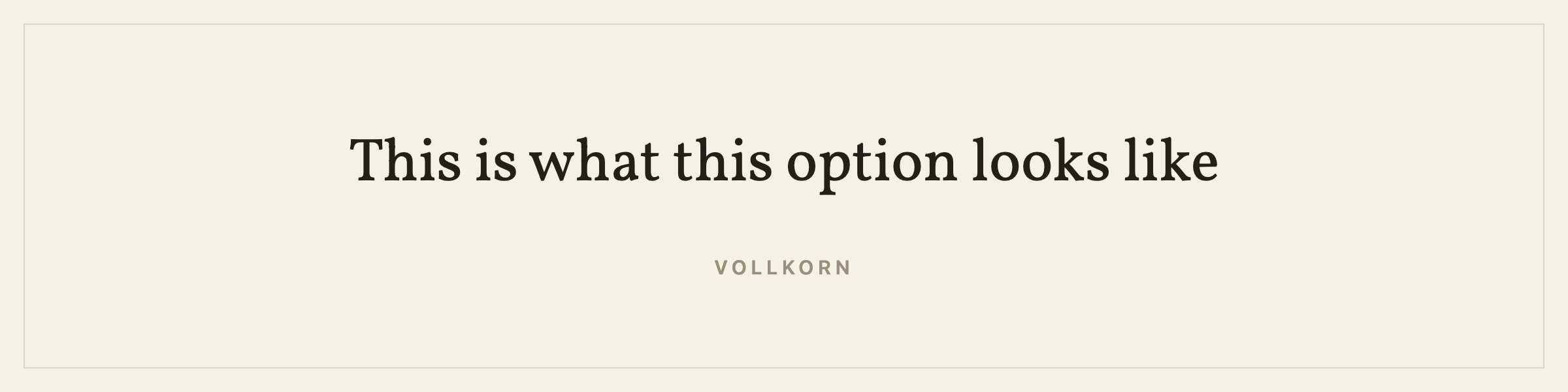
Vollkorn is the one to look at first for German. It was drawn by a German designer, it is warm and a bit heavy, and it holds up at small sizes.
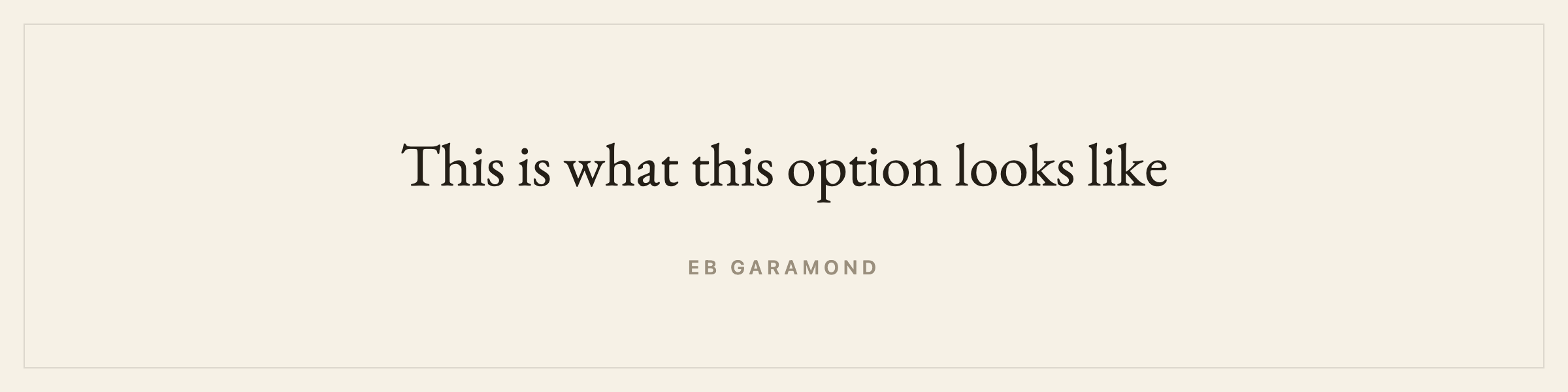
EB Garamond is the safe classic and the widest-set face in trade fiction.
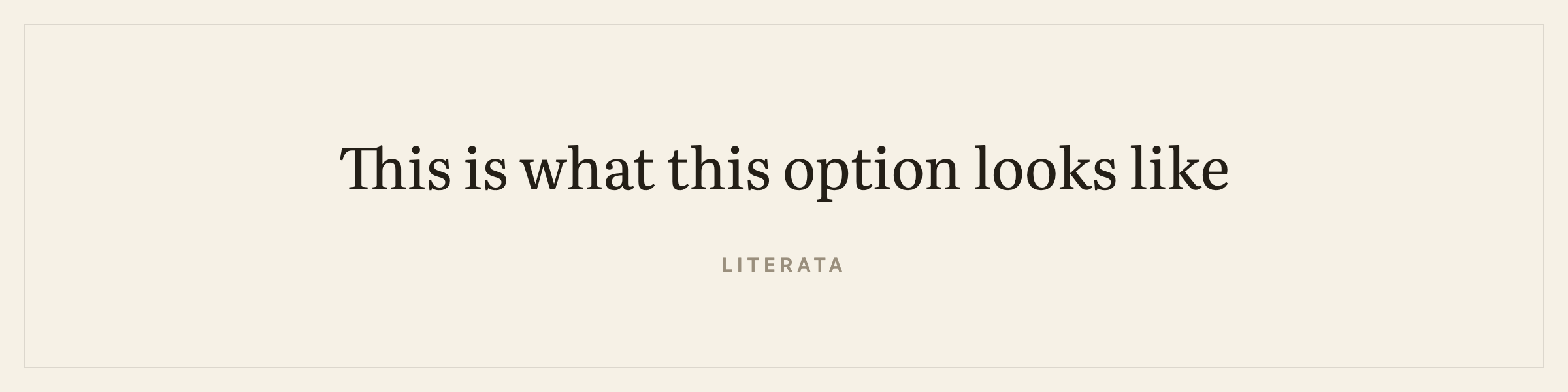
Literata was drawn for Google Play Books and reads well on paper and screen.
The rest of the shelf: Crimson Pro, Cormorant, Lora, Libre Baskerville, Source Serif 4, Spectral, Alegreya, Cardo, Gentium Book Plus, Newsreader, Libre Caslon Text and Charis SIL.
What you will not find here: Sabon, Berthold Garamond, Trump Mediaeval, Walbaum, FF Scala. Jan Tschichold cut Sabon for German printers and it is exactly the face you would want, and it is Monotype’s. The typeface documentation lists the whole shelf by language.
Exports for a German novel
- Print-ready PDF at your trim, mirrored margins, real gutter, font embedded, hyphenated on German patterns if you justify.
- EPUB 3 with your cover, tagged
de. - Store-ready EPUBs for Kindle, Kobo and Apple Books.
- Word and Markdown for a Lektorat or an archive.
- Manuscript format, double-spaced.
- A proofreading PDF two pages to a sheet, and a large print PDF.
- A watermarked copy per beta reader.
The KDP preflight checks the file against Amazon’s rules first.
German punctuation
Galley types „ and “ for you. What it does not do is decide between the German pair and the guillemets some German houses set instead, »like this«, which is a house choice. Type them if that is your house.
The other habits are yours to keep: the non-breaking space in abbreviations like z. B., and the Gedankenstrich, which in German is an en dash with spaces around it and not the em dash English uses. The dashes, hyphens and ellipses sheet covers which dash is which, and the dialogue punctuation rules cover speech.
How long a German novel is
German publishing counts in Normseiten. One Normseite is 30 lines of 60 characters, so 1,800 characters including spaces, and a manuscript is quoted in Normseiten when a Verlag asks. Galley counts in words, so you will be converting: German runs roughly 6.5 to 7 characters per word with spaces, which puts a 100,000 word novel somewhere near 380 Normseiten.
German editions also run longer than their English originals, commonly by ten to twenty per cent, which is worth knowing before you pick a trim. The word count to page count converter turns a length into a page count.
Trim sizes for a German book
Six standards, from mass market at 4.25×6.87 inches to Royal at 6.14×9.21. The German Taschenbuch runs around 11.8×18.7cm, close to mass market, and the Hardcover-Roman around 13.5×21.5cm, which sits between the Digest at 5.5×8.5 inches and Royal.
The spine width calculator and the trim size comparison would be helpful here.
Metadata and the copyright page
The copyright page writes itself from what you already filled in, and it is the page an Impressum obligation lands on. A German ISBN comes from MVB, and listing in the VLB is what gets a book into the Barsortiment and therefore into shops.
The Buchpreisbindung fixes the retail price of a book across every seller in Germany and applies to a self-published book too. Set it once.
Translating into or out of German
A translation in Galley is its own book: its own language, its own typeface shelf, its own ISBN, its own cover, still linked to the original, with the editor split so the original sits read-only beside what you are writing.
There are pages on writing a novel in Dutch, writing a novel in French and writing a novel in Polish if that is the direction you are working in.
No machine touches the prose. Galley has no AI anywhere near your writing.
Self-publishing and traditional publishing in German
Self-publishing. Amazon takes German in all three formats, and Amazon.de is one of the biggest self-publishing markets in the world. The same print PDF also goes to a German printer, to BoD, or to IngramSpark. Nothing in the file is Amazon-shaped.
Traditional publishing. German houses generally want an Exposé, a sample and the full manuscript in Normseiten, and the submission package assembles the pieces. Agenturen are the usual door into the larger Verlage.
The same book exports a submission and a print-ready interior, so you are not choosing on day one. The longer arguments are in Galley for self-publishing and Galley for traditional publishing.
Where to go next
- Writing software for novelists who don’t write in English covers every script Galley sets.
- Book design and typefaces lists every face by language.
- Series and translations covers the full language list.
- From manuscript to published book is the whole route, in order.
Questions people ask about writing a novel in German
Does Galley use German quotation marks?
Yes. Set the book's language to German and a straight double quote becomes „ at the start and “ at the end as you type. The rule follows the book's language, so an English book keeps its curly pair.
Does Galley hyphenate German?
Yes, on the reformed German patterns, and only in the print PDF when you justify. German compound nouns make this the language where it matters most.
Can I sell a German book on Amazon KDP?
Yes, in all three formats: Kindle ebook, paperback and hardcover. Amazon.de is one of the largest self-publishing markets there is.
Does the ß survive export?
Yes, along with the umlauts, in the print PDF, the EPUB, the Word file and the download filename.
Is the Galley interface in German?
No. The interface is English and stays English. One person builds Galley. Your book is entirely German.
Other languages
- Book writing software for DutchWrite and typeset a Dutch novel: hyphenation by Dutch rules, fifteen book faces licensed for sale, a print-ready PDF and a valid EPUB for Amazon or a Dutch printer.
- Book writing software for FrenchWrite and typeset a French novel: guillemets that appear when you type a quote, hyphenation by French rules, fifteen book faces and a print-ready PDF. Including what French typography asks for that no tool does automatically.
- Book writing software for PolishWrite and typeset a Polish novel: „low-high quotes“ as you type, hyphenation by Polish rules, fifteen book faces and a print-ready PDF. Including the Amazon rule that catches Polish writers out.