Book writing software for writing a novel in Polish
Amazon prints Polish and will not sell it as a Kindle ebook, which is the one fact that changes how a Polish book gets published. Galley types the Polish quote pair, hyphenates on Polish patterns, and gives you a print PDF any printer will take.
Jak napisać powieść po polsku
W Galley piszesz powieść i robisz z niej książkę. Piszesz od pierwszego zdania na prawdziwej stronie książki: twój format, twoje marginesy, krój pisma gotowej książki.
Cudzysłowy są polskie, dzielenie wyrazów działa według polskich reguł, a do wyboru jest piętnaście krojów książkowych, wszystkie na wolnej licencji, więc możesz sprzedawać to, co wydrukujesz.
Na końcu masz PDF gotowy do druku i poprawny plik EPUB. Interfejs jest po angielsku; książka jest po polsku.
Why Galley is the right book writing software for a novel in Polish
Start with the fact that changes your plan. Amazon prints Polish and refuses to sell it as a Kindle ebook. Paperback and hardcover are on its list, the Kindle store is not. That is Amazon’s rule, no tool can route around it, and it means a Polish book’s ebook life happens somewhere else entirely.
Galley handles that by telling you instead of letting you find out at upload. The Kindle-specific tools switch themselves off on a Polish book with the reason attached, and every export still works, because IngramSpark, a Polish printer, Legimi, Empik and Woblink are all still there and none of them asked Amazon.
The typesetting problems are the ordinary ones. Polish quotes „low, then high“ and English-first software gives you the curly pair. Polish words are long enough that a justified page without hyphenation opens gaps. And the font in most tools is one you are not licensed to sell. Galley picks the quote pair from the book’s language, carries Polish hyphenation patterns, and embeds only faces you may sell the book with.
Everything else is the same app: a true book page at your trim, the story bible beside the manuscript, a print-ready PDF and a valid EPUB.
How Polish gets typeset
Hyphenation follows Polish rules, in the justified print PDF only.
The diacritics go all the way through. Ł ą ę ś ż ź ć ń ó survive typing, autosave, search, sorting, both exports and the download filename.
Sorting is Polish, so ą comes after a and ż after z, where a Polish reader expects them.
Italics work. The italic in each of these faces was drawn, not computed.
The typefaces you get for Polish
Fifteen faces, all under the SIL Open Font License. Diacritic coverage is what to check in Polish, because ł and the ogoneks are where a shallow face gives up. All fifteen carry the full set.
EB Garamond is the safe first choice for a novel.

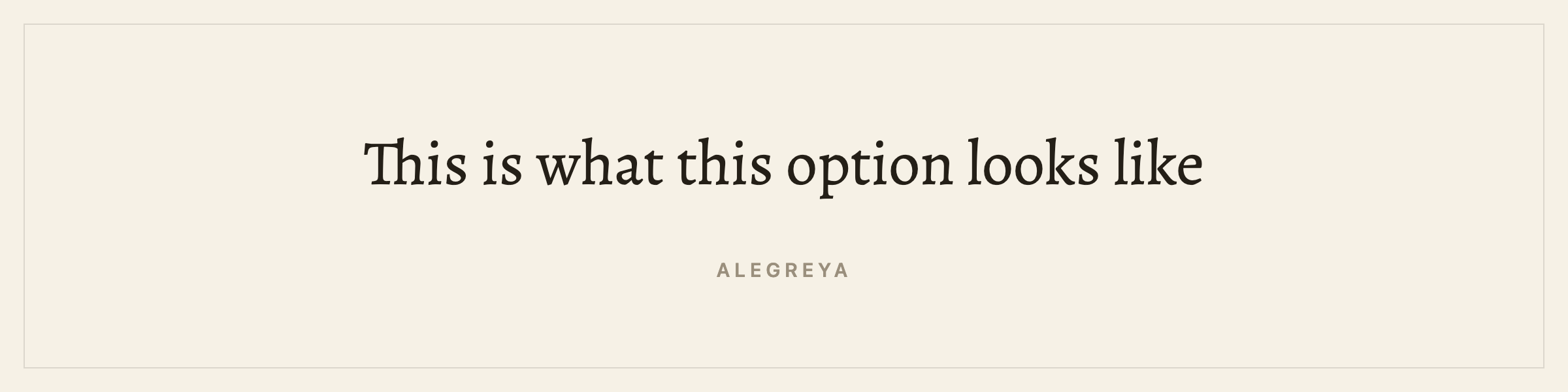
Alegreya was drawn for literature and handles stacked and hooked diacritics carefully.
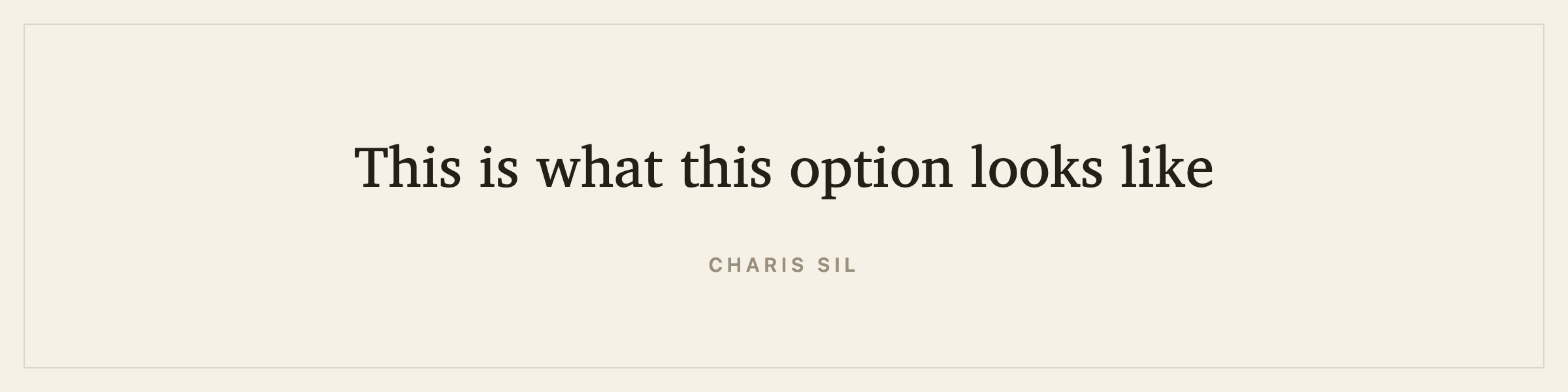
Charis SIL descends from Bitstream Charter and has unusually deep coverage.
The rest of the shelf: Crimson Pro, Cormorant, Lora, Libre Baskerville, Literata, Source Serif 4, Spectral, Vollkorn, Cardo, Gentium Book Plus, Newsreader and Libre Caslon Text.
What you will not find here: the Polish revivals of Antykwa Toruńska and Antykwa Półtawskiego in their commercial cuts. The typeface documentation lists every face by language.
Exports for a Polish novel
- Print-ready PDF at your trim, mirrored margins, real gutter, font embedded. This is the export that matters most in Polish, given the Kindle situation.
- EPUB 3 with your cover, tagged
pl, for every store except Amazon. - Word and Markdown for a redaktor or an archive.
- Manuscript format, double-spaced.
- A proofreading PDF two pages to a sheet, and a large print PDF.
- A watermarked copy per beta reader.
The Kindle store EPUB and the KDP metadata fields switch off on a Polish book, because there is no Kindle edition to tune a file for. The KDP preflight still checks the print file.
Polish punctuation
The quote pair you get automatically. Polish dialogue is usually set with a dash at the head of the line, and that is a character you type.
The other Polish habit worth keeping is the non-breaking space after a single-letter word, so a line never ends on w, z, i or a. Galley does not insert them, but they survive into the print PDF, and the editor’s Invisibles toggle shows non-breaking spaces so you can see where they are.
The dialogue punctuation rules and dashes, hyphens and ellipses sheets cover the general cases.
How long a Polish novel is
Polish publishing counts in arkusze wydawnicze. One arkusz is 40,000 characters including spaces, and a manuscript is quoted in arkusze when a wydawnictwo asks. Galley counts words, so expect to convert: Polish runs roughly 7 characters per word with spaces, which puts a 90,000 word novel near 16 arkusze.
The word count to page count converter turns a length into a page count at your trim.
Trim sizes for a Polish book
Six standards, from mass market at 4.25×6.87 inches to Royal at 6.14×9.21. Polish trade fiction is commonly issued around 12.5×19.5cm or 14×20.5cm, which land near the small trade at 5×8 inches and the Digest at 5.5×8.5.
The spine width calculator and the trim size comparison would be helpful here.
Metadata and the copyright page
The copyright page writes itself from the metadata you filled in. A Polish ISBN comes from the Biblioteka Narodowa and is free.
Translating into or out of Polish
A translation in Galley is its own book: its own language, its own typeface shelf, its own ISBN, its own cover, still linked to the original, with the editor split so the original sits read-only beside what you write.
There are pages on writing a novel in Czech, writing a novel in German and writing a novel in Ukrainian.
No machine touches the prose. Galley has no AI anywhere near your writing.
Self-publishing and traditional publishing in Polish
Self-publishing. Print through Amazon, or through a Polish printer, or through IngramSpark. Ebook through Legimi, Empik, Woblink, Apple Books, Google Play or Kobo, all of which take a standard EPUB. The one door closed to you is the Kindle store, and that is Amazon’s decision.
Traditional publishing. Polish houses read submissions directly and through agents. The submission package assembles the synopsis, the bio and the opening chapters, with the manuscript double-spaced.
The same book exports both. The longer arguments are in Galley for self-publishing and Galley for traditional publishing.
Where to go next
- Writing software for novelists who don’t write in English covers every script Galley sets.
- Book design and typefaces lists every face by language.
- Series and translations covers the full language list.
- EPUB vs print PDF explains what each format can do.
Questions people ask about writing a novel in Polish
Can I sell a Polish book on Amazon KDP?
In print only. Amazon lists Polish for paperback and hardcover and does not sell it as a Kindle ebook. Your EPUB still works everywhere else, and Galley switches the Kindle-specific tools off on a Polish book and says why.
Which quote marks does a Polish book get?
The low-then-high pair, „like this“, which is the Polish convention. The rule follows the book's language, so an English book in the same account keeps its curly pair.
Does Galley hyphenate Polish?
Yes, on Polish patterns, and only in the print PDF when you justify.
Do ł, ą, ę and ż survive export?
Yes, through typing, autosave, search, sorting, the print PDF, the EPUB, the Word file and the download filename.
Other languages
- Book writing software for CzechWrite and typeset a Czech novel: „low-high quotes“ as you type, hyphenation by Czech rules, háček and kroužek intact through every export, and a print-ready PDF.
- Book writing software for GermanWrite and typeset a German novel: „Anführungszeichen“ as you type, hyphenation that copes with compound nouns, fifteen book faces and a print-ready PDF for KDP or a German printer.
- Book writing software for UkrainianWrite and typeset a Ukrainian novel: ten book faces with real Cyrillic italics, hyphenation by Ukrainian rules, «guillemets» as you type, and a print-ready PDF. Including the Amazon rule Ukrainian writers hit.