Book writing software for writing a novel in Turkish
Turkish has two i's and software that ignores that turns İstanbul into Istanbul and ısı into isi. Galley sorts and searches in the Turkish alphabet, hyphenates on Turkish patterns, and gives you a print PDF any printer will take. Amazon does not sell Turkish at all.
Türkçe roman nasıl yazılır
Galley romanı yazdığınız ve kitabı yaptığınız yerdir. İlk cümleden itibaren gerçek bir kitap sayfasında yazarsınız: kendi ölçünüz, kendi kenar boşluklarınız, basılı kitabın yazı karakteri.
On beş kitap yazı karakteri var, hepsi bastığınızı satabilmeniz için özgür lisanslı, ve heceleme Türkçe kurallarını izliyor.
Sonunda baskıya hazır bir PDF ve geçerli bir EPUB elde edersiniz. Arayüz İngilizce; kitap Türkçe.
Why Galley is the right book writing software for a novel in Turkish
Turkish has two i’s and it is the most reliable way to find out whether a piece of software knows what language it is in. İstanbul with a dotted capital and Istanbul with a plain one are different words. Isı and ısı are different words. Software that uppercases and lowercases by the English rules destroys the distinction, and it does it silently.
Galley’s search and sorting run through the book’s own language, so a Turkish book is sorted and matched in the Turkish alphabet rather than the browser’s default. Both characters survive typing, autosave, both exports and the download filename.
The second thing is ş and ç. Turkish uses the cedilla forms; Romanian uses comma-below forms that look similar and are different characters. Galley keeps whichever you typed instead of normalising one into the other, which is what breaks a Turkish book that has passed through a careless converter.
The third is the market, and it is closed at one end: Amazon does not list Turkish in any format. So the print-ready PDF and the valid EPUB are the whole product.
Everything else is the same app: a true book page at your trim, the story bible beside the manuscript, a print-ready PDF and a valid EPUB.
How Turkish gets typeset
Sorting and search are Turkish, which is where the two i’s matter most.
Hyphenation follows Turkish rules, in the justified print PDF only. Turkish agglutinates and the words run long, so a justified page benefits.
The full alphabet goes all the way through, ç ğ ı İ ö ş ü, including into the download filename.
Italics work, and every face on the shelf carries a real italic cut.
The typefaces you get for Turkish
Fifteen faces, all under the SIL Open Font License. The dotless ı and the capital İ are the coverage test, and all fifteen carry them.
EB Garamond is the safe first choice for a novel.

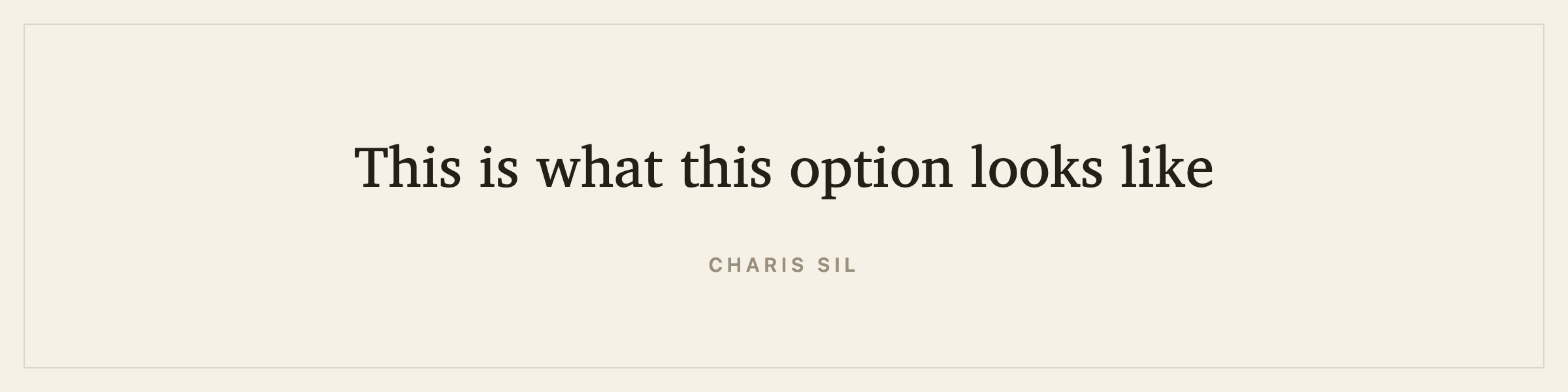
Charis SIL has the deepest diacritic coverage on the shelf.
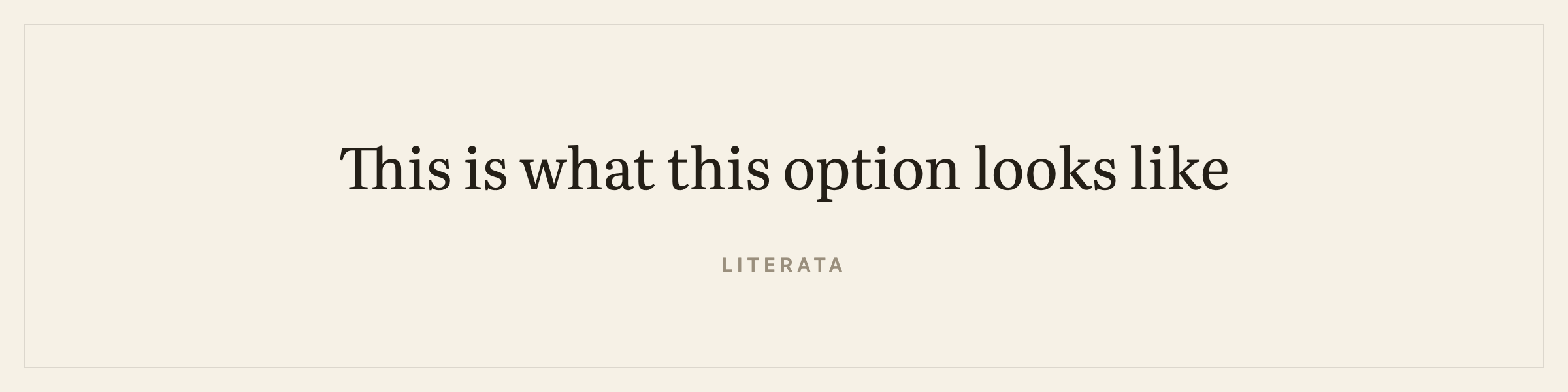
Literata reads well at small sizes and sets an even page.
The rest of the shelf: Crimson Pro, Cormorant, Lora, Libre Baskerville, Source Serif 4, Spectral, Alegreya, Vollkorn, Cardo, Gentium Book Plus, Newsreader and Libre Caslon Text. The typeface documentation lists every face by language.
Exports for a Turkish novel
- Print-ready PDF at your trim, mirrored margins, real gutter, font embedded.
- EPUB 3 with your cover, tagged
tr. - Store-ready EPUBs for Kobo and Apple Books.
- Word and Markdown for an editör or an archive.
- Manuscript format, double-spaced.
- A proofreading PDF two pages to a sheet, and a large print PDF.
- A watermarked copy per beta reader.
The Amazon-shaped tools switch off on a Turkish book and say why.
Turkish punctuation
Turkish sets speech in the curly pair or with a dash at the head of the line, and both are characters you type. The apostrophe separates a suffix from a proper noun, as in İstanbul’da, and the closing single quote is the apostrophe in every quote style Galley ships, so it curls correctly.
The dialogue punctuation rules and dashes, hyphens and ellipses sheets cover the rest.
How long a Turkish novel is
Turkish publishers quote length in words and printed sheets, and Turkish is compact in word count because one word carries what English spreads over three or four. A Turkish manuscript can look short by word count and set to the same extent. Galley counts words and projects the page count at your trim, which is the number that decides your spine.
The word count to page count converter should be a helpful resource for you.
Trim sizes for a Turkish book
Six standards, from mass market at 4.25×6.87 inches to Royal at 6.14×9.21. Turkish trade fiction is commonly issued around 13.5×21cm, between the Digest at 5.5×8.5 inches and Royal. The spine width calculator and the trim size comparison would be helpful here.
Metadata and the copyright page
The copyright page writes itself from the metadata you filled in. A Turkish ISBN comes from the Ministry of Culture and Tourism, and a bandrol is required for books sold in Turkey.
Translating into or out of Turkish
A translation in Galley is its own book: its own language, its own typeface shelf, its own ISBN, its own cover, still linked to the original, with the editor split so the original sits read-only beside what you write.
There are pages on writing a novel in Greek, writing a novel in Romanian and writing a novel in Hungarian.
No machine touches the prose. Galley has no AI anywhere near your writing.
Self-publishing and traditional publishing in Turkish
Self-publishing. Amazon is closed, so print goes through a Turkish printer or IngramSpark and the ebook goes to Google Play, Apple Books, Kobo or a Turkish store. Turkish print costs are low enough that a domestic run is often the better economics anyway.
Traditional publishing. Turkish houses read submissions directly. The submission package assembles the synopsis, the bio and the opening chapters.
The same book exports both. The longer arguments are in Galley for self-publishing and Galley for traditional publishing.
Where to go next
- Writing software for novelists who don’t write in English covers every script Galley sets.
- Book design and typefaces lists every face by language.
- Series and translations covers the full language list.
- EPUB vs print PDF explains what each format can do.
Questions people ask about writing a novel in Turkish
Does Galley handle the dotted and dotless i?
Sorting and search follow the book's language, so a Turkish book uses the Turkish alphabet where ı and i are separate letters. Both characters survive typing, both exports and the download filename.
Can I sell a Turkish book on Amazon KDP?
No. Amazon does not list Turkish in any format, for ebook, paperback or hardcover. Every Galley export still works, so the file goes to a Turkish printer or to a store that sells Turkish ebooks.
Does Galley hyphenate Turkish?
Yes, on Turkish patterns, and only in the print PDF when you justify. Turkish agglutinates, so the words are long and it helps.
Do ş, ğ and ç survive export?
Yes, with the cedilla forms Turkish uses and not the comma-below forms Romanian uses. They are different characters and Galley keeps whichever you typed.
Other languages
- Book writing software for GreekWrite and typeset a Greek novel: seven book faces with a real Greek alphabet, polytonic coverage where you need it, guillemets as you type, Greek hyphenation and a print-ready PDF.
- Book writing software for RomanianWrite and typeset a Romanian novel: ș and ț with a comma below and not a cedilla, „low-right quotes” as you type, hyphenation by Romanian rules and a print-ready PDF.
- Book writing software for HungarianWrite and typeset a Hungarian novel: „low-right quotes” as you type, hyphenation for long agglutinated words, ő and ű drawn properly, and a print-ready PDF.