A Series Bible for Book Two and Beyond
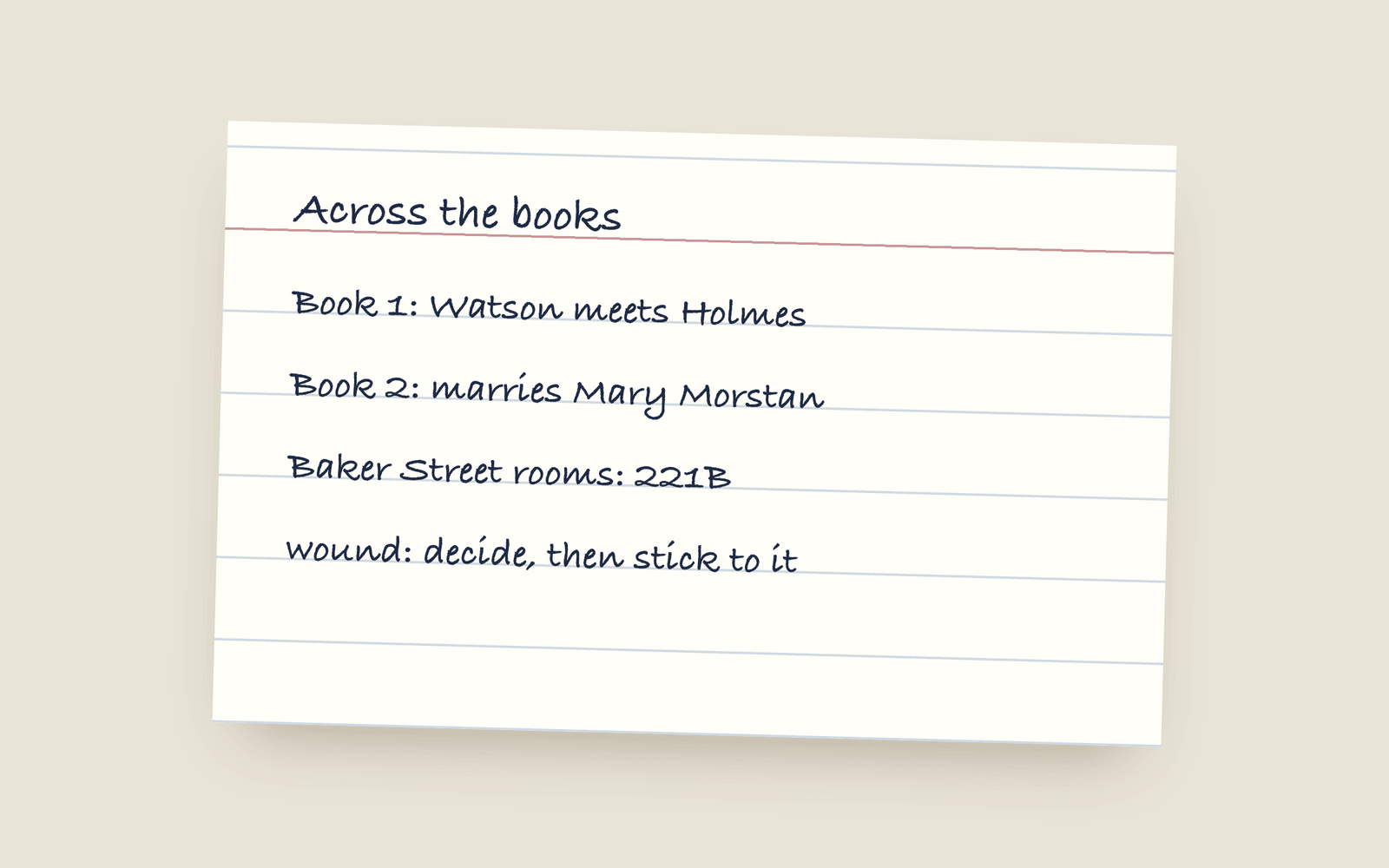
A series bible is the story bible for every book in a series together: the characters and places that carry over, the dates of everything that's happened, the rules of the world, and the style decisions. Start it from book one's notes, add a line for what each book changed, and carry it into the next book before you write a word of it.
Writing book two is when most writers find out how much of book one they’ve forgotten. What colour were her eyes. How old was he when the war started. Which side of the river the house was on. Fans of a series remember all of it, and they’ll write to tell you.
A single book’s notes can get away with being a bit messy, because they only have to last a year. A series bible has to last a decade.
What a series bible holds
Everything a story bible does, plus:
- What each book changed. Who died, who married, who moved, who found out. One line per character per book is enough: “Book 2: loses the farm. Knows about the letter.”
- A running timeline. Dates for everything across all the books, in the story’s own calendar. Book three is set “four years after the fire”, so you need to know when the fire was.
- Ages. Work them out from a birth year, not from “she was 30 in book one”. Ages are where series go wrong most, because time passes between books for the characters and you have to decide how much.
- The rules. Magic, technology, politics, anything with a rule the reader has learned. Breaking one by accident in book four costs you readers.
- Style decisions. Spellings, invented words, how you hyphenated that place name. Your style sheet for book one is book two’s starting point.
- Loose threads. Things you set up and haven’t paid off yet. A short list you check before each book.
Conan Doyle needed one
The Holmes stories are a good warning. Across four novels and 56 stories, Watson’s war wound moves from his shoulder to his leg, his wife calls him James instead of John, and the dates of the stories don’t fit together into one calendar. People have written whole books trying to make them fit. Doyle was writing for magazines and he didn’t keep notes for continuity, and he didn’t think the stories would still be read a hundred years later.
If you’re already a book in
You don’t need to rebuild book one from scratch. Go through it once with a notebook:
- List every named character, with the facts the book states about them.
- List every place, with what we learn about it.
- Put every event with a date or time on a timeline.
- Write down what’s true at the end of the book that wasn’t at the start.
That’s a weekend for most books. Then read the list before you start book two, not halfway through it.
How Galley does it
In Galley, books can be grouped into a series with a number, and they sit together in order on your dashboard. When you start the next book with Next in series from the New book window, it begins with the previous book’s story bible (characters, locations, world-building, research and style sheet), its front and back matter pages, and its book design, so book two looks like book one and knows who everyone is.
The timeline and the references stay with book one, because they point at book one’s chapters, so keep a running timeline of the whole series in world-building or your own notes.
It’s a copy, not a live link. Change a character’s eye colour in book two and book one stays as it was, which is usually what you want (book one is published). The series docs cover how series appear on the dashboard, and the story bible itself is on the features page.
More on craft
- Conan Doyle Used “Upon” 465 Times: Overused Words in FictionThe filler words fiction editors cut first, real counts from The Adventures of Sherlock Holmes, and how to find your own habits without reading the whole draft again.
- How Many Words Should a Chapter Be?Typical chapter lengths in novels by genre, why there's no rule, and how to tell whether one of your chapters is too long or too short for the book around it.
- How Long Should a Novel Be? Word Counts by GenreThe word-count ranges agents and readers actually expect (fantasy, romance, thriller, YA, literary), and what to do if you're way over or under.