KDP Royalties Explained: 35%, 70% and the Paperback Maths
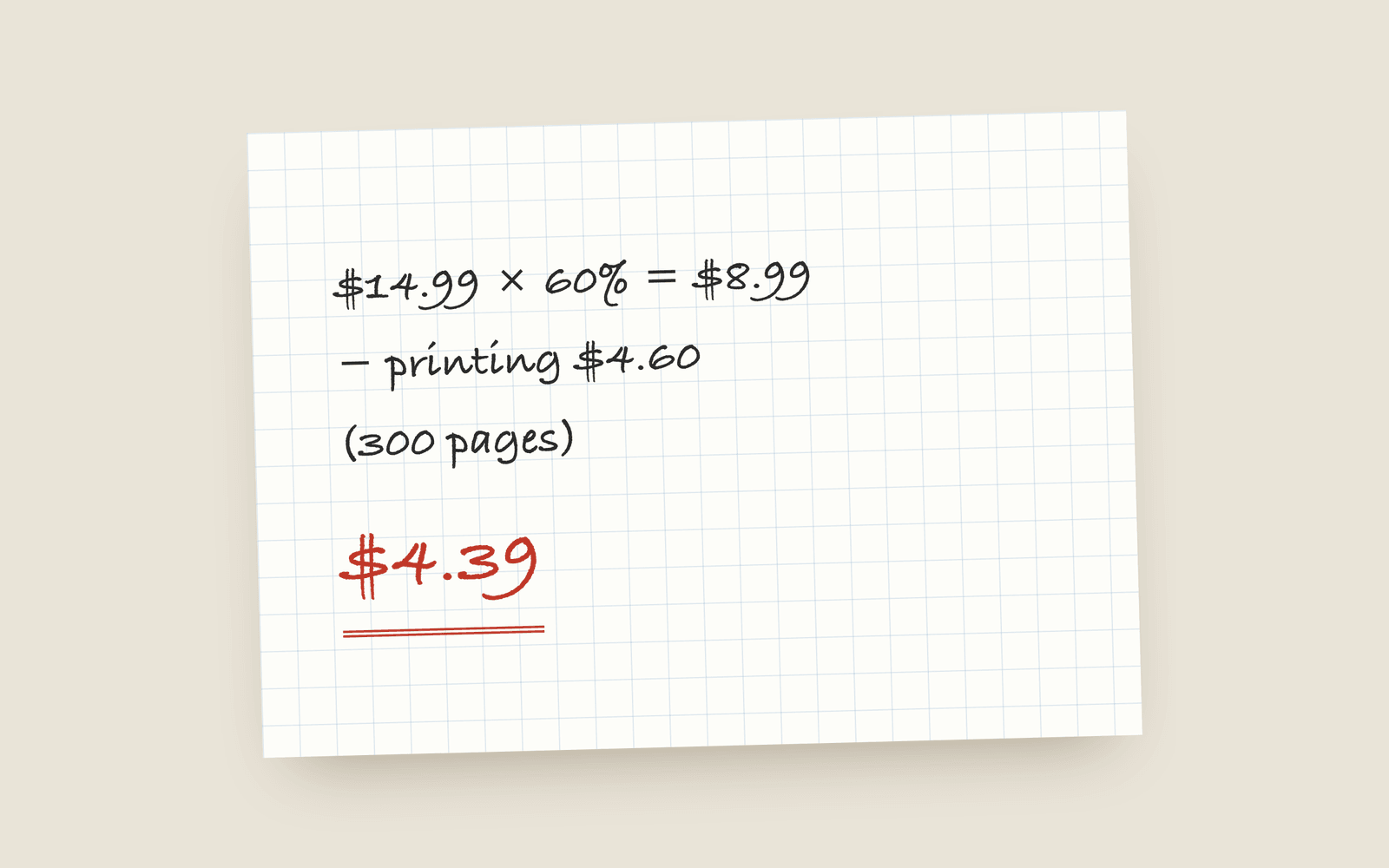
Kindle ebooks earn 70% of the list price, minus a delivery fee of $0.15 per megabyte, if they're priced between $2.99 and $12.99, and 35% otherwise. Paperbacks earn 60% of the list price (50% under $9.99) minus the printing cost, which for a black-and-white novel over 110 pages is $1.00 plus $0.012 a page in the US. A 300-page paperback at $14.99 earns about $4.39 a copy.
Amazon’s royalty pages are accurate and very hard to read. Here’s the same information with the numbers worked out for a normal novel. All figures are for Amazon.com in US dollars, and they change, so check KDP’s own ebook and paperback royalty pages before you set a price.
Ebooks: 35% or 70%
There are two royalty rates for Kindle ebooks.
70% applies if the list price is between $2.99 and $12.99 (the top of that band went up from $9.99 in July 2026, and it’s opt-in for books already published), and the ebook is priced at least 20% below the print edition. On every 70% sale, Amazon also charges a delivery fee of $0.15 per megabyte of the converted file. A text-only novel converts to one or two megabytes, so that’s 15 to 30 cents.
35% applies to everything else: books under $2.99, books over $12.99, and some marketplaces. There’s no delivery fee at 35%.
| Ebook price | Rate | Royalty (1.5 MB file) |
|---|---|---|
| $0.99 | 35% | $0.35 |
| $2.99 | 70% | $1.87 |
| $4.99 | 70% | $3.27 |
| $9.99 | 70% | $6.77 |
| $14.99 | 35% | $5.25 |
That last row is why most novels are priced under the top of the 70% band.
If the ebook is in Kindle Unlimited, borrows pay by the page instead. That’s in Kindle Unlimited page reads.
Paperbacks: 60% minus printing
For a paperback sold on Amazon, you get 60% of the list price, minus the printing cost, if the list price is $9.99 or more. Below $9.99 it’s 50% minus printing.
The printing cost for a black-and-white paperback on a standard trim with 110 pages or more is $1.00 plus $0.012 per page. Under 110 pages it’s a flat $2.30.
Worked through for a 300-page novel:
- Printing: $1.00 + (300 × $0.012) = $4.60
- At $14.99: (60% × $14.99) − $4.60 = $4.39 a copy
- At $12.99: (60% × $12.99) − $4.60 = $3.19 a copy
- At $9.49: (50% × $9.49) − $4.60 = about 15 cents a copy
That last one is the trap. Pricing a paperback just under $9.99 drops you to 50%, and on a long book the royalty almost disappears.
Expanded distribution (selling through bookshops and libraries via KDP) pays 40% minus printing, so you need a higher list price for it to earn anything.
The page count is the lever
Because printing is charged per page, your page count changes your royalty on every copy. The same 90,000 words can be 300 pages or 380 depending on the trim, the typeface, the margins and the line spacing. That’s 96 cents a copy.
The word count to page count calculator shows what your manuscript runs to at each trim, and the KDP royalty calculator does the sums above for any price and page count, in dollars, pounds and euros. The Kindle ebook royalty calculator does the ebook side.
How Galley does it
Galley doesn’t set prices or connect to your KDP account. What it does is give you the real page count: the print PDF is the file KDP prints, so its page count is the one your printing cost is based on, and you see it before you upload. KDP preflight checks that the page count fits your trim. If you’re deciding between trims to bring the cost down, choosing a trim size covers the trade-offs, and formatting a paperback for KDP covers the rest of the upload.
More on publishing
- Kindle Unlimited Page Reads: How KENP PaysHow Kindle Unlimited pays authors through KENP page reads, roughly what a page is worth, how many KENP pages your novel is, and when a borrow beats a sale.
- The Copyright Page for a Novel, Line by LineWhat goes on the copyright page of a self-published novel, which lines are required, which are habit, and the wording most novels use.
- How to Credit Quoted Material in a BookHow to credit an epigraph, a quoted poem or lyric, and a passage from another book in your novel, where the credit goes, and why you should use the rights holder's exact wording.