How to Write a Synopsis for Literary Agents
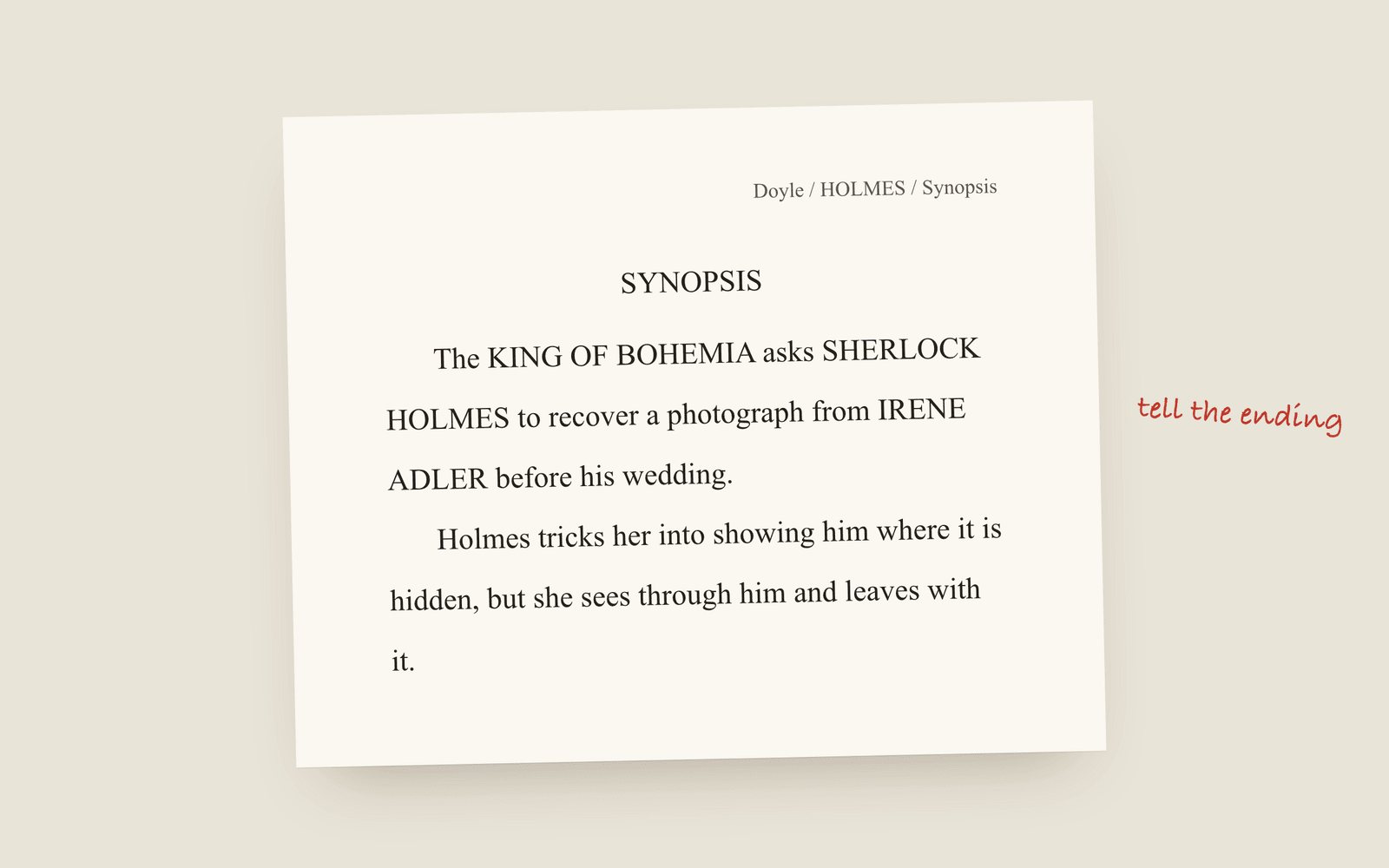
A synopsis tells the whole story of your novel, including the ending, in one or two pages. Write it in the present tense and the third person, introduce only the characters the plot needs, and focus on what the main character wants, the choices they make and how it changes them. Follow each agent's guidelines on length and format, because they differ.
If the query letter is what makes an agent want to read your book, the synopsis is how they check the book delivers. It’s a summary of the whole story, beginning to end, and most writers hate writing it more than anything else in the submission. It’s still worth doing properly, because some agents read it before the sample pages.
What it is, and what it isn’t
A synopsis is not a blurb. A blurb sells the book to a reader and stops before the ending. A synopsis tells an agent what happens, including the ending, so they can see whether the plot holds together. Keeping the twist secret is the most common mistake, and it reads as if you don’t know how the book ends.
It’s also not a chapter-by-chapter outline. An agent wants the shape of the story, not every scene.
How long
The most common request is one page, single-spaced, about 500 to 700 words. Some agents ask for two pages, and a few for longer. Always follow what the agent’s guidelines say. If they don’t say, one page is safe.
How to write it
- Present tense, third person. “Elizabeth meets Darcy at a ball and dislikes him at once.” Even if the book is in first person.
- Main character first. Start with who they are and what they want at the start of the story.
- Only the characters who matter. Four or five names at most. Everyone else is “her sister” or “a lawyer”.
- Names in capitals on first mention. A common convention, so the agent can find who’s who: “ELIZABETH BENNET, the second of five daughters…”. Not every agent cares, but nobody minds.
- Cause and effect, not a list. “Because she refuses him, he writes the letter” is a story. “Then she refuses him. Then he writes a letter” is a list.
- Show the change. By the end, how is the main character different? That’s what makes it a novel and not a series of events.
- Tell them the ending. Plainly. Who lives, who wins, what it costs.
Leave out subplots unless they change the main story, description, dialogue and themes stated as themes. If the synopsis is too long, cut minor characters first. Their scenes usually go with them.
Format
Unless the agent says otherwise: your name and the book title at the top, the word “Synopsis”, then the text in the same font as your manuscript (Times New Roman 12pt is safe), single-spaced for a one-page synopsis with a blank line between paragraphs. If the guidelines ask for double spacing, they mean a longer synopsis. The standard manuscript format post covers the manuscript itself.
A way to start
Write one sentence for the beginning, one for each major turn, and one for the ending. That’s your skeleton. Then add the character’s reason for each turn. You’ll be at about a page.
How Galley does it
Galley doesn’t write your synopsis (and won’t, there’s no AI in it). It does put it together with everything else an agent asks for. The submission package in the Toolkit is a cover page, a synopsis, your bio and your first three chapters, in the double-spaced manuscript format agents expect, as one Word file.
The synopsis has its own field on the book’s Metadata page, under the blurb, because they’re different documents: the blurb stays on your listing and the synopsis goes to agents. The bio comes from your profile. The submission docs have the details, Galley for querying writers covers the rest of the process, and the free query letter formatter helps with the letter that goes on top.
More on publishing
- Kindle Unlimited Page Reads: How KENP PaysHow Kindle Unlimited pays authors through KENP page reads, roughly what a page is worth, how many KENP pages your novel is, and when a borrow beats a sale.
- KDP Royalties Explained: 35%, 70% and the Paperback MathsHow Amazon KDP pays for ebooks and paperbacks: the 35% and 70% ebook bands, the delivery fee, the paperback royalty and printing cost, and worked examples for a typical novel.
- The Copyright Page for a Novel, Line by LineWhat goes on the copyright page of a self-published novel, which lines are required, which are habit, and the wording most novels use.