How to Write a Book Blurb, and Format It for Amazon
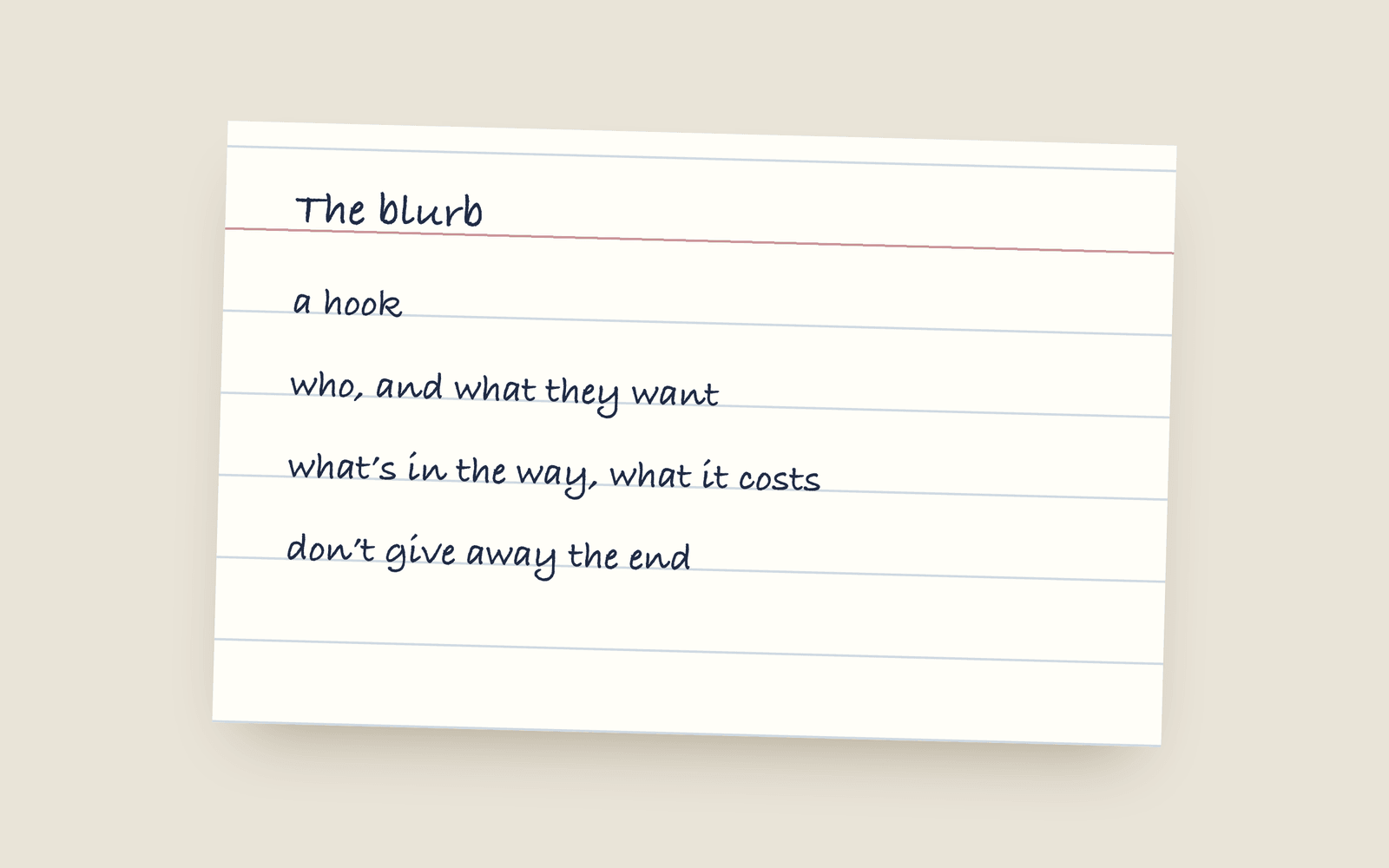
A novel blurb is usually 150 to 250 words: a hook line, the main character and what they want, what's in the way, and what they stand to lose, ending on a question or a choice instead of the ending. On Amazon the description can be up to 4,000 characters and supports a small set of HTML tags for bold, italics, line breaks and lists.
The blurb is the second thing a reader judges your book on, after the cover. On Amazon it’s the text under the title. On a paperback it’s the back cover. And it’s the hardest 200 words you’ll write about the book, because you know everything that happens and the blurb can only tell them a little of it.
How a novel blurb is built
Most blurbs that work follow roughly the same shape:
- A hook. One line that makes someone keep reading. Often set in bold on Amazon. It can be a situation, a question, or a line that sets the tone.
- The character and what they want. Who are we following, and what are they after at the start?
- What’s in the way. The problem, the antagonist, the thing that turns their life over.
- The stakes. What happens if they fail. This is what makes it a story and not a summary.
- The turn. End on the choice they face, or a question, not the outcome.
Then, often, a line of comparison or praise if you have it (“For readers of…”), and nothing else.
How long
For a novel, 150 to 250 words. Romance and thriller blurbs tend to be shorter and punchier. Literary fiction and fantasy can run longer. On a paperback back cover, you’ll also be limited by the space left after the barcode and any quotes, so write the short version first.
The mistakes
- Summarising the plot. A blurb isn’t a synopsis. Don’t tell them the second half.
- Too many names. One name, maybe two. Every extra character is something the reader has to remember before they care.
- World-building first. Fantasy blurbs especially. Start with the person, not the history of the kingdom.
- Vague stakes. “Everything she loves” means nothing. What, specifically?
- Questions nobody’s asking. “Will she find the courage to…?” Yes. She’s the main character.
- Writing it last, at midnight. It deserves drafts, the same as the first chapter.
Read the blurbs of the top twenty books in your exact category on Amazon. You’ll see the conventions of your genre quickly, and they’re there because they work.
Formatting it for Amazon
KDP’s description field takes up to 4,000 characters and supports a limited set of HTML: bold, italics, underline, line breaks, paragraphs, a few heading sizes and lists. Most other formatting gets stripped, and if you paste straight from Word you can lose your paragraph breaks.
The usual pattern is a bold hook, short paragraphs (two or three sentences each, because people read listings on phones), and the praise or comparison line in italics at the end.
The free Amazon description formatter takes plain text, lets you mark the bold and italic parts, and gives you the HTML to paste into KDP. It also counts the characters for you.
How Galley does it
In Galley the blurb is one of the fields on the book’s Metadata page, with the cover, title, categories, keywords and ISBNs. KDP preflight checks that the description is filled in before you upload, along with the title, author and cover. The blurb is yours to write, as you’d hope from a tool with no AI in it. The publishing docs cover the rest of the listing, and the glossary has the definition.
More on publishing
- Kindle Unlimited Page Reads: How KENP PaysHow Kindle Unlimited pays authors through KENP page reads, roughly what a page is worth, how many KENP pages your novel is, and when a borrow beats a sale.
- KDP Royalties Explained: 35%, 70% and the Paperback MathsHow Amazon KDP pays for ebooks and paperbacks: the 35% and 70% ebook bands, the delivery fee, the paperback royalty and printing cost, and worked examples for a typical novel.
- The Copyright Page for a Novel, Line by LineWhat goes on the copyright page of a self-published novel, which lines are required, which are habit, and the wording most novels use.