Book writing software for writing a novel in Korean
Korean spaces its words, so it counts in words and not characters, unlike the rest of CJK. Two Myeongjo faces get embedded in your print PDF, chapter headings come out as 제1장, and Amazon does not sell Korean at all.
한국어로 소설 쓰기
Galley는 소설을 쓰고 그대로 책으로 만드는 곳입니다. 첫 문장부터 진짜 책 페이지 위에서 씁니다. 판형도 여백도, 인쇄될 서체도 그대로입니다.
본문은 명조체로 조판되고, 장 제목은 제1장처럼 한국어로 나옵니다.
마지막에는 인쇄소에 넘길 수 있는 PDF와 올바른 EPUB이 나옵니다. 프로그램 화면은 영어이고, 책은 한국어입니다.
Why Galley is the right book writing software for a novel in Korean
Korean sits in the CJK group for one reason and outside it for another, and a tool that treats it as CJK gets both halves wrong.
It counts in words. Korean spaces its words, so a Korean book counts the way an English one does. Japanese, Chinese and Thai count characters because they write no spaces; Korean does not belong in that group and Galley does not put it there. Every screen showing a number on a Korean book shows words.
Its fonts are the CJK problem. Hangul faces run to tens of megabytes, the same as Japanese and Chinese ones, so the editor falls back to a system Myeongjo stack while you write. What gets embedded in your print PDF and EPUB is the face you picked. What you look at on screen is a system face that resembles it. That is a deliberate trade, because serving a 30MB font on every page load would make the editor unusable.
Chapter headings are Korean. 제1장, not “Chapter One”.
Amazon does not list Korean in any format. Not ebook, not paperback, not hardcover. So the print-ready PDF and the valid EPUB are the whole product, which in Korea means Kyobo, Yes24 and Aladin instead of the Kindle store.
Everything else is the same app: a true book page at your trim, the story bible beside the manuscript, a print-ready PDF and a valid EPUB.
How Korean gets typeset
Spaces are decorated in the Invisibles view, because Korean spaces its words. Japanese, Chinese and Thai are not offered that, and Korean is.
Line breaking follows the prohibition rules for the punctuation Korean shares with the rest of CJK.
There is no italic tradition, so the italic button is hidden on a Korean book instead of offering a mechanically slanted Myeongjo.
There is no hyphenation, and justification is off by default.
The language tag matters. A reading device that does not know it is holding Korean may fall back to a Chinese or Japanese face for the Han characters in a mixed line. The EPUB is tagged, and so are the read-through and the beta-reader link.
Vertical writing is not built. Galley sets Korean horizontally, which is the norm for contemporary Korean publishing.
The typefaces you get for Korean
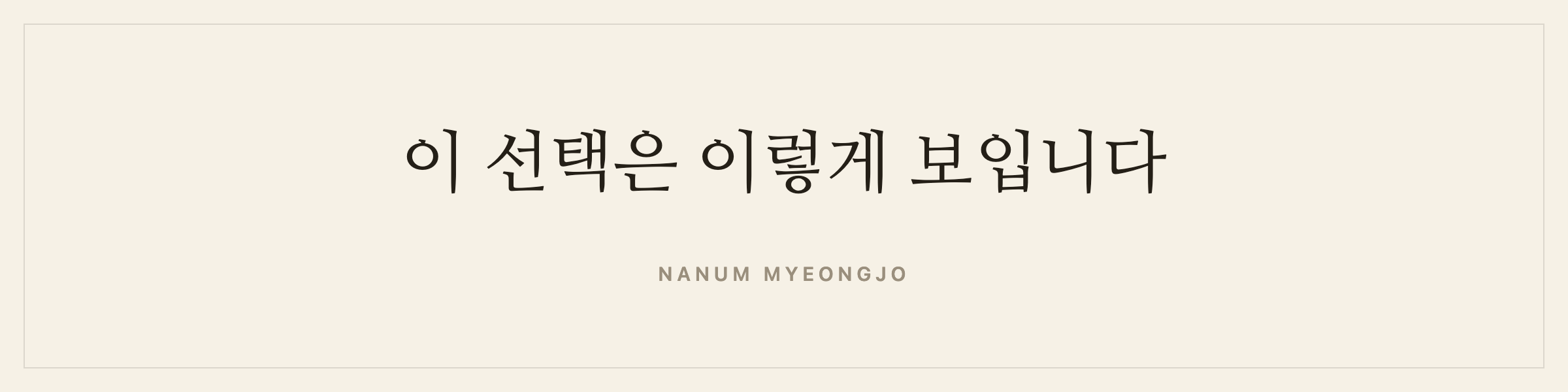
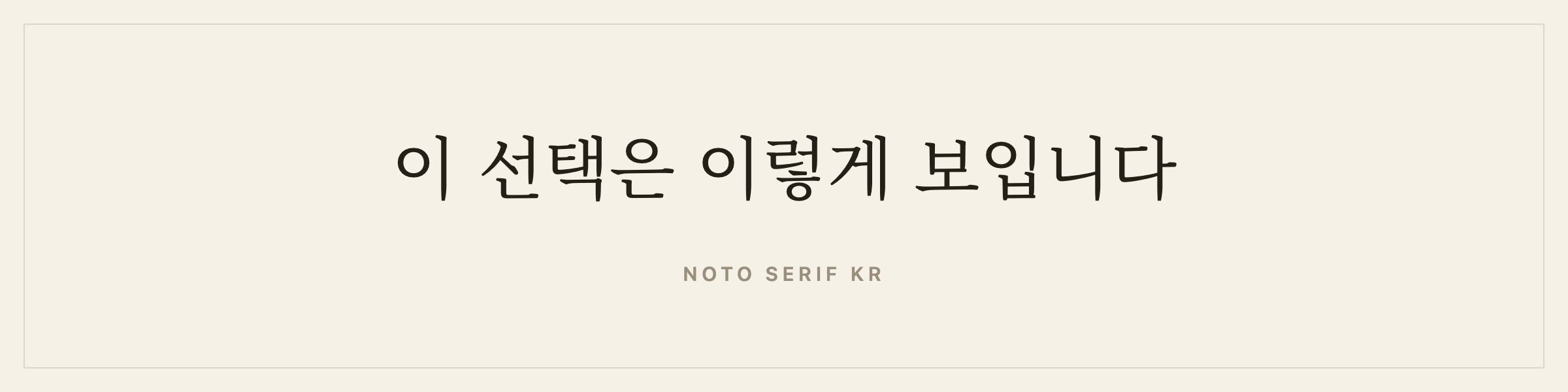
Two Myeongjo faces, both under the SIL Open Font License.
Nanum Myeongjo is the literary choice.
Noto Serif KR is the broad, reliable default.
What you will not find here: SM Myeongjo and the Sandoll families, which is what Korean book publishing actually sets. They license per title and none permits embedding in a file you sell. The typeface documentation lists every face by language.
Exports for a Korean novel
- Print-ready PDF at your trim, mirrored margins, real gutter, font embedded.
- EPUB 3 with your cover, tagged
ko. - Store-ready EPUBs for Kobo and Apple Books.
- Word and Markdown for an 편집자 or an archive.
- Manuscript format, double-spaced, set in the book’s own face.
- A proofreading PDF two pages to a sheet, and a large print PDF.
- A watermarked copy per beta reader.
The Amazon-shaped tools switch off on a Korean book and say why.
Korean punctuation
Korean sets speech in the curly double pair and in 「」 depending on the house, and both are characters you type. The middle dot and the CJK comma come through unchanged.
The dialogue punctuation rules sheet covers speech across conventions.
How long a Korean novel is
Korean publishing quotes length in 원고지 of 200 characters and in 매. Galley counts your Korean book in words, so you will be converting if a publisher asks in 매. The page-count projection at your trim is the number a printer works from.
The word count to page count converter should be a helpful resource for you.
Trim sizes for a Korean book
Six standards, from mass market at 4.25×6.87 inches to Royal at 6.14×9.21. Korean trade fiction is commonly issued around 128×188mm or 145×210mm, which land between the small trade at 5×8 inches and Royal. Ask your printer what they set. The spine width calculator and the trim size comparison would be helpful here.
Metadata and the copyright page
The copyright page writes itself from the metadata you filled in. Every field detects its own script, so a Korean title and a Latin ISBN both come out right, and the download filename keeps its Hangul. A Korean ISBN comes through the National Library of Korea.
Translating into or out of Korean
A translation in Galley is its own book: its own language, its own typeface shelf, its own ISBN, its own cover, still linked to the original, with the editor split so the original sits read-only beside what you write.
There are pages on writing a novel in Japanese, writing a novel in Chinese and writing a novel in Vietnamese.
No machine touches the prose. Galley has no AI anywhere near your writing, which includes not offering to translate it.
Self-publishing and traditional publishing in Korean
Self-publishing. Amazon is closed, so print goes through a Korean printer or IngramSpark and the ebook goes to Kyobo, Yes24, Aladin, Google Play, Apple Books or Kobo.
Traditional publishing. Korean publishing runs heavily on literary prizes and on the 신인상 route as well as on submissions. The submission package assembles the synopsis, the bio and the opening chapters.
The same book exports both. The longer arguments are in Galley for self-publishing and Galley for traditional publishing.
Where to go next
- Writing software for novelists who don’t write in English covers every script Galley sets.
- Book design and typefaces lists every face by language.
- Series and translations covers the full language list.
- Book typography basics is the set of rules that makes a page look made.
Questions people ask about writing a novel in Korean
How does Galley count a Korean book?
In words. Korean writes spaces between words, so unlike Japanese, Chinese and Thai it counts the way English does. Every screen that shows a number uses words.
Which Korean fonts does Galley include?
Nanum Myeongjo and Noto Serif KR, both under the SIL Open Font License so Galley can embed them in a file you sell.
Can I sell a Korean book on Amazon KDP?
No. Amazon does not list Korean in any format. The print PDF goes to a Korean printer or IngramSpark, and the EPUB goes to any store that sells Korean.
Are the chapter headings in Korean?
Yes. A Korean book gets 제1장, not "Chapter One".
Other languages
- Book writing software for JapaneseWrite and typeset a Japanese novel: Mincho faces, kinsoku shori line breaking, bōten emphasis, a 奥付 instead of a copyright page, Japanese trim sizes and character counting.
- Book writing software for ChineseWrite and typeset a Chinese novel in Simplified or Traditional: Song faces, kinsoku line breaking, character counting, and a print-ready PDF. Including what Amazon will and will not take.
- Book writing software for VietnameseWrite and typeset a Vietnamese novel: stacked diacritics that do not collide, twelve book faces that carry the full set, and a print-ready PDF for a Vietnamese printer.